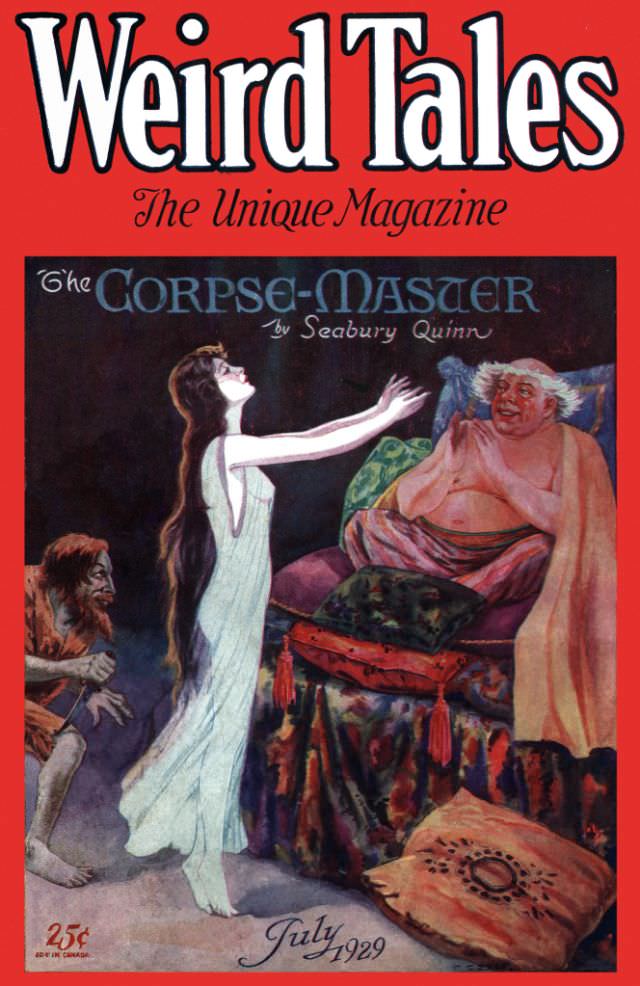
Bold red type announces “Weird Tales” above the tagline “The Unique Magazine,” a promise that the cover art eagerly keeps. Beneath that masthead, the featured story title “The Corpse-Master” stands out in ominous lettering, credited to Seabury Quinn, instantly setting a pulp-horror mood. Even at a glance, the July 1929 issue reads like a doorway into the weird fiction boom, when lurid illustration and sensational copy fought for attention on crowded newsstands.
At center stage, a pale woman in a long, flowing gown reaches forward with an almost trance-like intensity, her dark hair spilling down her back as if part of the spell. Facing her, a heavyset man reclines amid draped fabric and patterned cushions, his expression caught between alarm and uneasy fascination, hands raised in a defensive gesture. In the shadows, a crouched figure peers from the left, adding a conspiratorial edge and reinforcing the sense that something clandestine—or supernatural—has been set in motion.
Details such as the “25¢” price and the script “July 1929” at the bottom anchor the artwork firmly in the magazine’s original moment, when cover illustration was both advertisement and atmosphere. The saturated colors, theatrical poses, and exotic interior textures are classic pulp magazine design, engineered to sell a shiver before the first page is turned. For collectors and readers of classic Weird Tales covers, this striking composition remains a vivid snapshot of early twentieth-century horror and fantasy publishing culture.