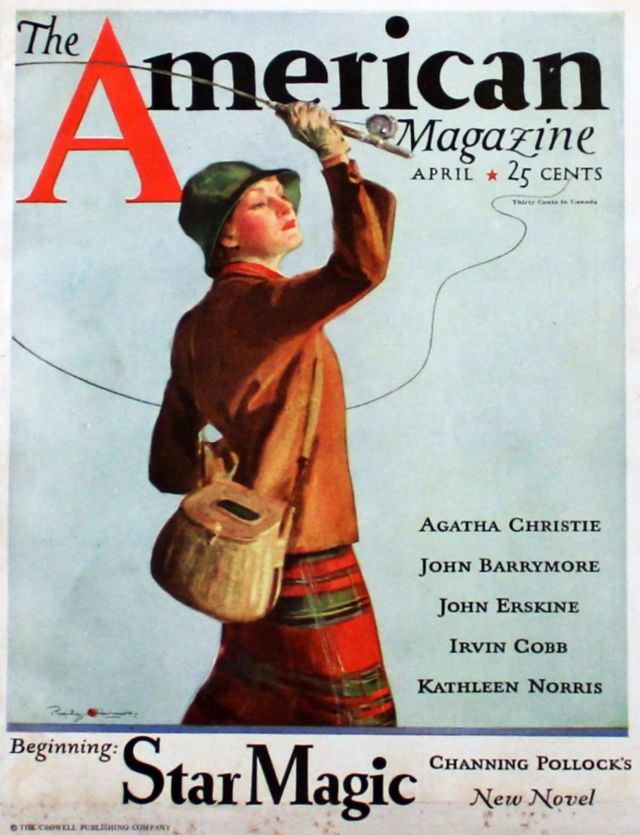
April 1933 arrives in bold color on the cover of *The American Magazine*, where a stylish figure in a cloche hat pauses mid-step to lift a slender, trumpet-like instrument toward the sky. A looping line curls behind them like a drawn melody, turning the pale background into a stage for motion and sound. The oversized red “A” and crisp typography announce the title with confidence, a striking piece of cover art designed to stop a passerby at the newsstand.
The design balances modern fashion with a lively sense of performance: warm browns and reds in the coat and patterned skirt contrast with the cool, open backdrop, while the satchel slung at the hip suggests travel, work, or city life on the move. At the upper right, “April” and “25 cents” anchor the cover in everyday reality, reminding readers of the magazine’s place in ordinary routines even as the illustration leans into glamour and aspiration. It’s an engaging example of early-1930s American magazine cover illustration, where clean shapes and confident color choices communicate mood at a glance.
Down the right side, a roll call of contributors—Agatha Christie, John Barrymore, John Erskine, Irvin Cobb, and Kathleen Norris—adds literary and cultural weight, while the bottom banner promises “Star Magic,” labeled as a new novel. For collectors and historians, this April 1933 *American Magazine* cover offers a vivid snapshot of what publishers believed would sell: recognizable bylines, a tantalizing headline, and an image that suggests music, modernity, and possibility. As a WordPress feature, it’s a strong artifact for anyone exploring Great Depression-era print culture, vintage cover art, and the visual language of American magazines.