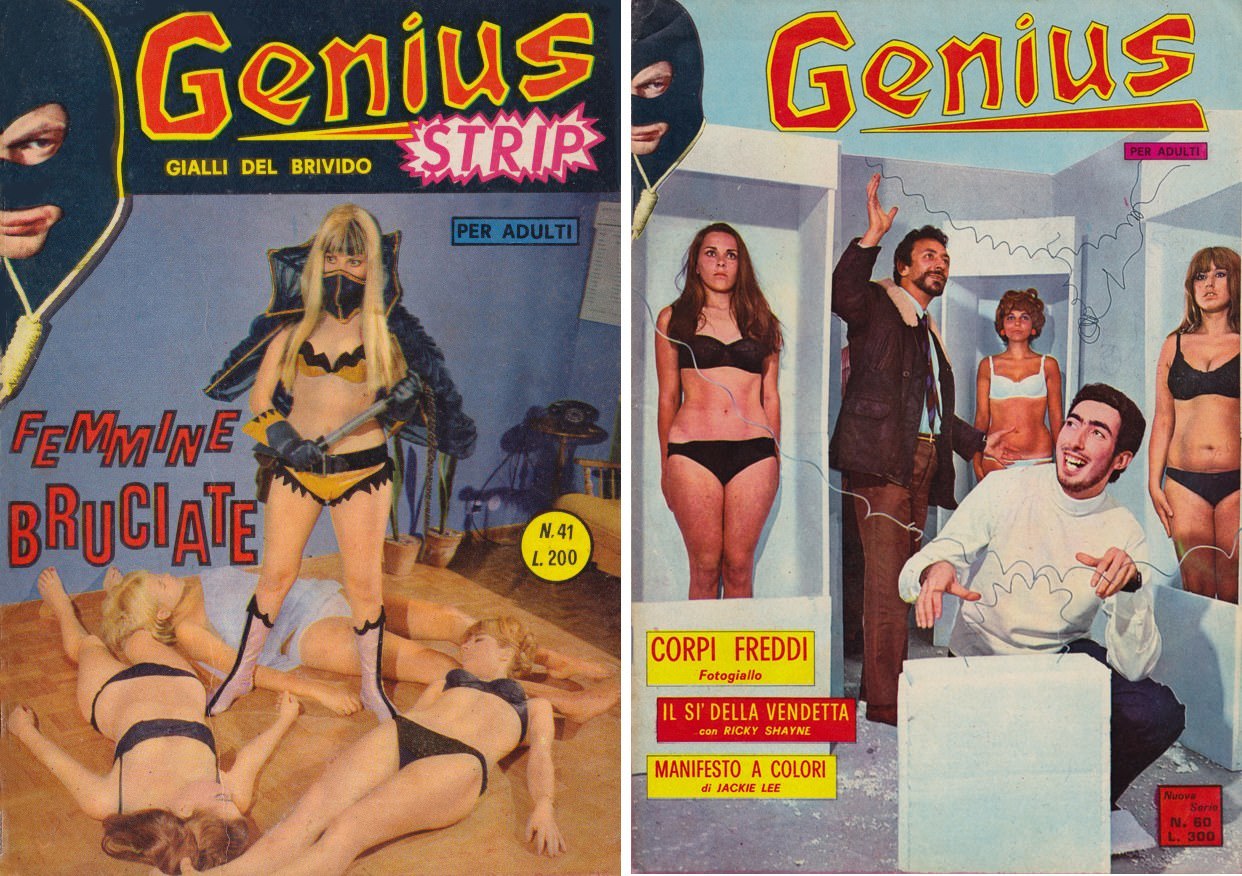
Bold, lurid lettering—“Genius Strip” paired with “Gialli del Brivido” and the blunt “Per Adulti”—announces the pulp world of Italian crime fotonovelas, where sensationalism was part of the sales pitch. On one cover, a masked figure looms over a staged tableau of bodies, with high-contrast colors and melodramatic posing that echo both noir thrillers and tabloid aesthetics. These were comics built from photographs, turning studio scenes into serialized shock, desire, and danger for readers hungry for fast, visual storytelling.
Across the spread, the second cover leans into a different kind of spectacle: a cramped, box-like set, figures arranged like suspects on display, and a grinning man positioned as ringleader or captive—ambiguity as bait. Scribbled, lightning-like lines add a nervous energy, suggesting panic, violence, or a mind unraveling, while the minimal props keep attention locked on faces and bodies. Even without reading the dialogue, the composition performs the plot, promising betrayal, revenge, and cold-blooded intrigue in a single glance.
Fotonovelas in Spain and Italy during the 1960s–70s often lived at the intersection of popular cinema, street-corner print culture, and the loosening boundaries of “adult” entertainment. Cover art like this functioned as a miniature movie poster: bright typography, provocative imagery, and genre cues designed for instant recognition on newsstands. For collectors and cultural historians, these pages are time capsules of mass-market crime comics—where photographic storytelling turned sensational plots into a vivid, consumable thrill.