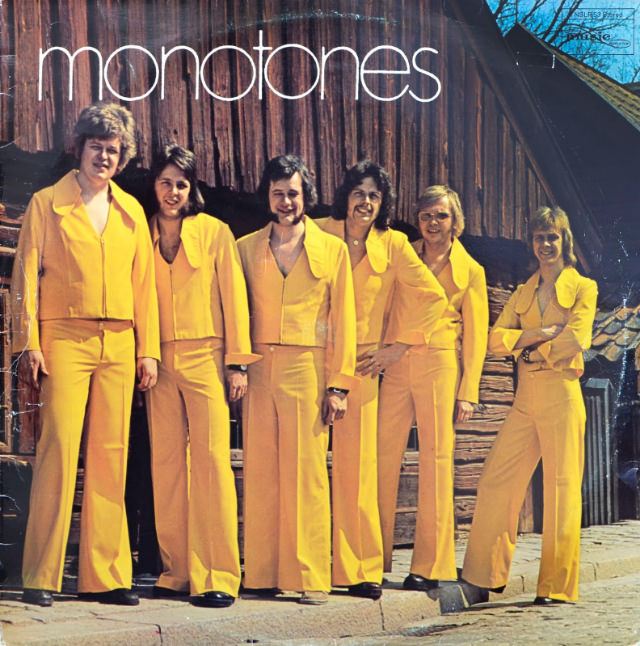
Across the top, the word “monotones” floats above a lineup of six men posed like a confident unit, their matching outfits turning the album cover into a statement of style as much as sound. They stand shoulder to shoulder in coordinated sunshine-yellow ensembles—wide collars, sharp lapels, and flared trousers that catch the light—while open necklines and relaxed stances keep the look from feeling stiff. Each figure adds a small variation in cut and attitude, a reminder that uniformity in band fashion often still leaves room for personality.
Behind them, a weathered wooden building and a strip of stone paving ground the scene in everyday Northern European texture, the kind of humble backdrop that makes bright stage-ready clothing pop. The contrast is deliberate: rustic timber and muted browns amplify the daring color choice, letting the suits perform even in stillness. Scuffs and creases from age and handling lend the cover a lived-in authenticity, as if this artifact has traveled through record crates and living rooms for decades.
Vintage Swedish menswear on album covers often balanced camaraderie with spectacle, and this image leans into both—coordinated tailoring for group identity, bold color for cultural punch. The styling nods to an era when pop and dance bands used fashion to signal modernity, optimism, and a willingness to stand out, even with minimal props. For collectors and fashion historians alike, it’s a vivid example of how music marketing, masculine silhouette, and playful bravado converged into a single, unforgettable look.