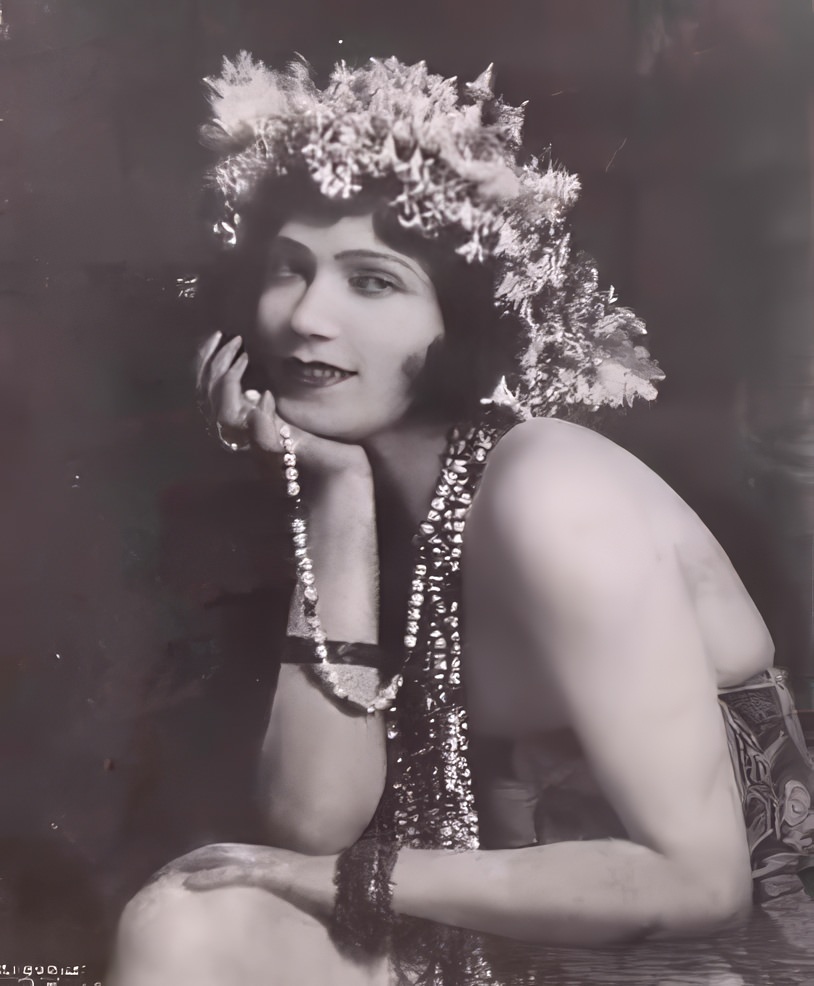
Feathered blooms crown the dancer’s sleek bob, framing a half-smile that feels equal parts invitation and dare. A cascade of long pearls drapes over a glittering costume, catching the studio light the way jazz-age nightlife caught the public imagination. The pose—chin resting on a hand, eyes angled toward the viewer—turns a simple portrait into a performance in miniature.
In the 1920s, Gilda Gray became synonymous with the shimmy, helping carry a once-edgy dance from stage novelty to nationwide craze. That popularity wasn’t only about steps; it was about attitude, speed, and modernity, the same qualities celebrated by the flapper era’s new silhouettes and bolder makeup. Even in stillness, the styling hints at motion: sparkle, fringe-like textures, and jewelry designed to sway and flash with every shoulder shake.
Studio portraits like this worked as early celebrity branding, circulating in magazines and publicity prints that sold glamour to a mass audience hungry for fresh icons. The dark, uncluttered background keeps attention on the theatrical headpiece, the beaded sheen, and the relaxed confidence—visual shorthand for Roaring Twenties fashion and culture. As a piece of dance history, it captures how the shimmy’s fame traveled: not just through music halls, but through images that made rebellion look irresistible.