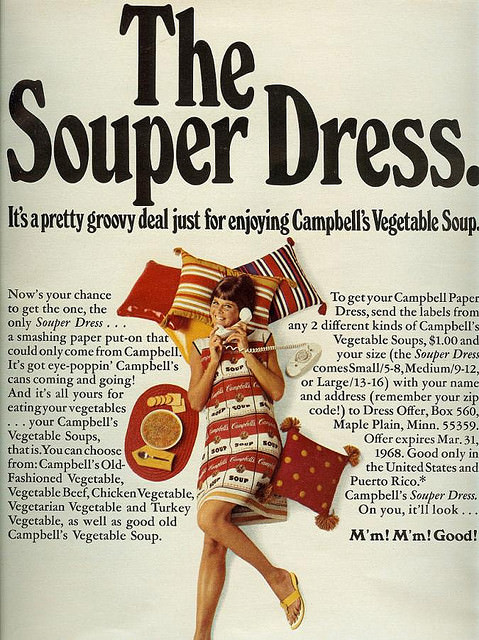
Bold, ad-style lettering announces “The Souper Dress,” turning a simple page into a snapshot of 1960s pop culture exuberance where food brands and fashion flirted openly. The graphic layout and playful copy lean hard into the decade’s “groovy” vocabulary, suggesting that novelty could be worn as easily as it could be bought. Even without a runway, the message is clear: mass marketing had discovered that clothing could be a conversation piece—and a collectible.
At the center, a model reclines in a short, sleeveless paper dress patterned with repeating soup labels, an eye-catching look that blurs the line between outfit and advertisement. The surrounding pillows, bright stripes, and mid-century styling amplify the sense of youthful, consumer-forward fun, while the minimal, disposable silhouette hints at why paper dresses were destined to be a short-lived trend. It’s fashion as a promotional gimmick—lightweight, photogenic, and unapologetically tied to the brand.
Reading the offer text reveals the mechanics behind the craze: a mail-in deal linked to product purchases, framed as a limited-time opportunity to snag something “pop” and new. That blend of affordability, novelty, and branding helps explain how 1960s paper dress fashion briefly caught fire—perfect for parties, publicity, and the era’s appetite for the modern. For anyone exploring fashion history, advertising history, or the cultural impact of consumer goods, this image captures how quickly style could be made, sold, and discarded.