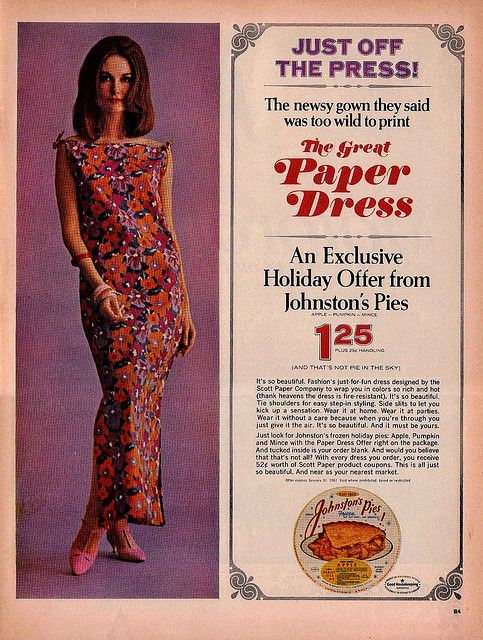
Brightly patterned and boldly marketed, the paper dress was one of the most memorable fashion experiments of the 1960s, and this magazine-style advertisement makes the pitch with giddy confidence. A model stands in a sleeveless, ankle-length floral design, her look as crisp and graphic as the era’s print culture. The surrounding layout—big type, punchy slogans, and product-copy exuberance—signals how novelty fashion moved quickly from runway fantasy to everyday consumer temptation.
What makes this moment so revealing is the collision of high-style language with supermarket practicality: the ad frames the “Great Paper Dress” as an “exclusive holiday offer” tied to Johnston’s Pies. Here, disposable clothing isn’t a cautionary tale yet—it’s a promise of modern convenience, affordability, and conversation-starting flair. The copy leans into a playful idea of being “just off the press,” turning paper’s throwaway reputation into a selling point and reflecting a decade fascinated by pop art, mass production, and new materials.
Behind the groovy surface lies a short-lived trend that still speaks to the history of 1960s fashion and culture: how advertising shaped what people wore, and why some crazes burned bright and fast. This post explores the paper dress phenomenon as both garment and gimmick—part wearable print, part promotional stunt—capturing the era’s love of bold patterns, quick change, and the thrill of something startlingly new. For readers interested in vintage fashion, retro advertising, and the cultural mood of the sixties, the paper dress remains a perfect snapshot of style designed to be here today, gone tomorrow.