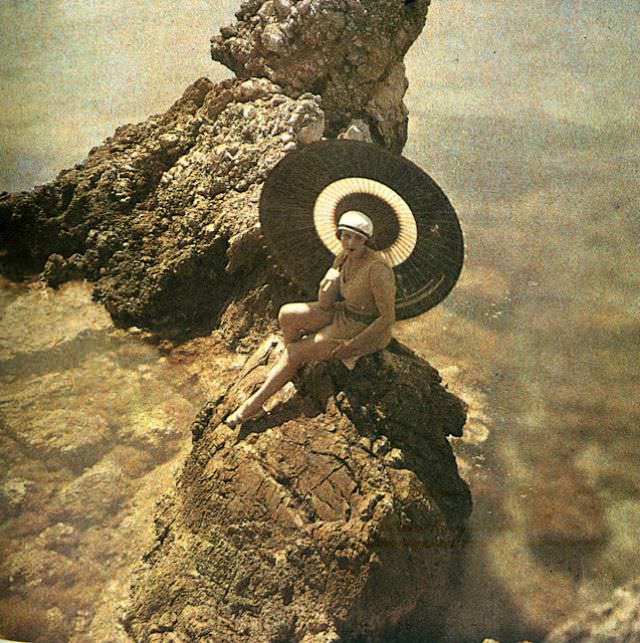
Perched on a rugged outcrop above shifting seawater, a woman settles into the sun with the calm assurance of someone who owns the moment. The wide, striped parasol behind her reads almost like a halo, turning a simple beach accessory into a bold graphic statement against the rock’s rough texture. Soft, warm tones and a lightly faded surface give the scene the feel of an early color process, where leisure and modernity arrive with a delicate haze.
Rather than treating the sitter as a decorative element in the landscape, the composition grants her presence and agency: she is not posed to please so much as caught in the act of being herself. The practical swimsuit, the close-fitting cap, and the protective shade speak to a changing era in women’s fashion and mobility, when seaside culture encouraged new ways of moving, resting, and appearing in public. Even without a visible boulevard or café, the spirit of Parisian style lingers in the attention to silhouette and attitude—elegance translated for the shore.
Lartigue’s portrait sensibility is felt in the way personality emerges through posture, scale, and mood, making this more than a pretty view of summer. The rock’s jagged spine, the water’s mottled shimmer, and the parasol’s crisp rings set up a dialogue between nature’s rawness and curated self-presentation. For readers drawn to fashion history, French photography, and the cultural life of early twentieth-century leisure, the image offers a vivid reminder that individuality can be expressed as much in quiet confidence as in couture.