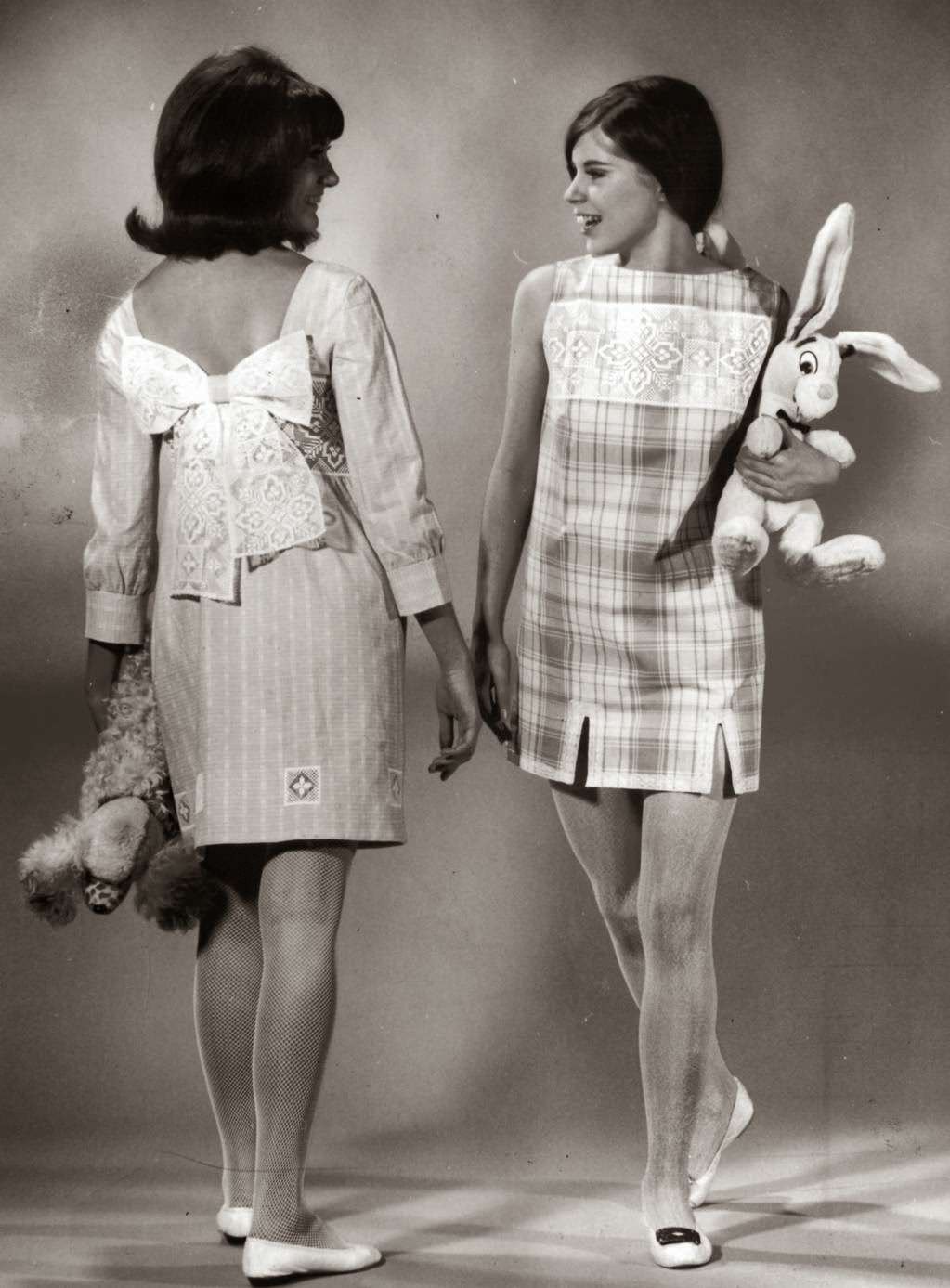
A playful studio pose sets the mood: two teenagers turn toward each other mid-conversation, one cradling a plush rabbit while the other lets a fuzzy toy dangle at her side. Their hair is neatly styled in the era’s smooth, graphic silhouettes, and the clean backdrop keeps attention on the clothes—short hemlines, straight lines, and that unmistakable 1960s confidence. Even without color, the contrast between crisp fabric and delicate trim reads clearly, giving the scene the feel of a newspaper fashion feature meant to be clipped and saved.
From the captioned details, the garments themselves become the story—youthful minidresses made “special” by Venetian lace rather than heavy ornament. One design turns to reveal a giant bow at the back, a striking flourish against a simple, structured shape; the other uses a plaid cotton skimmer as a canvas for a wide lace band and narrow edging, with small slits at the hem that emphasize movement. The quoted prices anchor the look in everyday consumer life, showing how the new shorter silhouette was marketed not as couture fantasy but as something a student could realistically aspire to own.
Earl Gustie’s Chicago Tribune description points to a moment when fashion and culture were renegotiating the boundaries of age, modesty, and modern taste. Lace—so often associated with tradition—gets repurposed here as a fresh accent on streamlined, above-the-knee styles, underscoring how the decade blended innocence and boldness in the same outfit. For readers searching 1960s fashion history, miniskirt origins, or vintage high school style, this photo offers a crisp snapshot of how trends traveled from the runway and boutiques into the pages of a daily paper and, eventually, into the wardrobes of American teens.