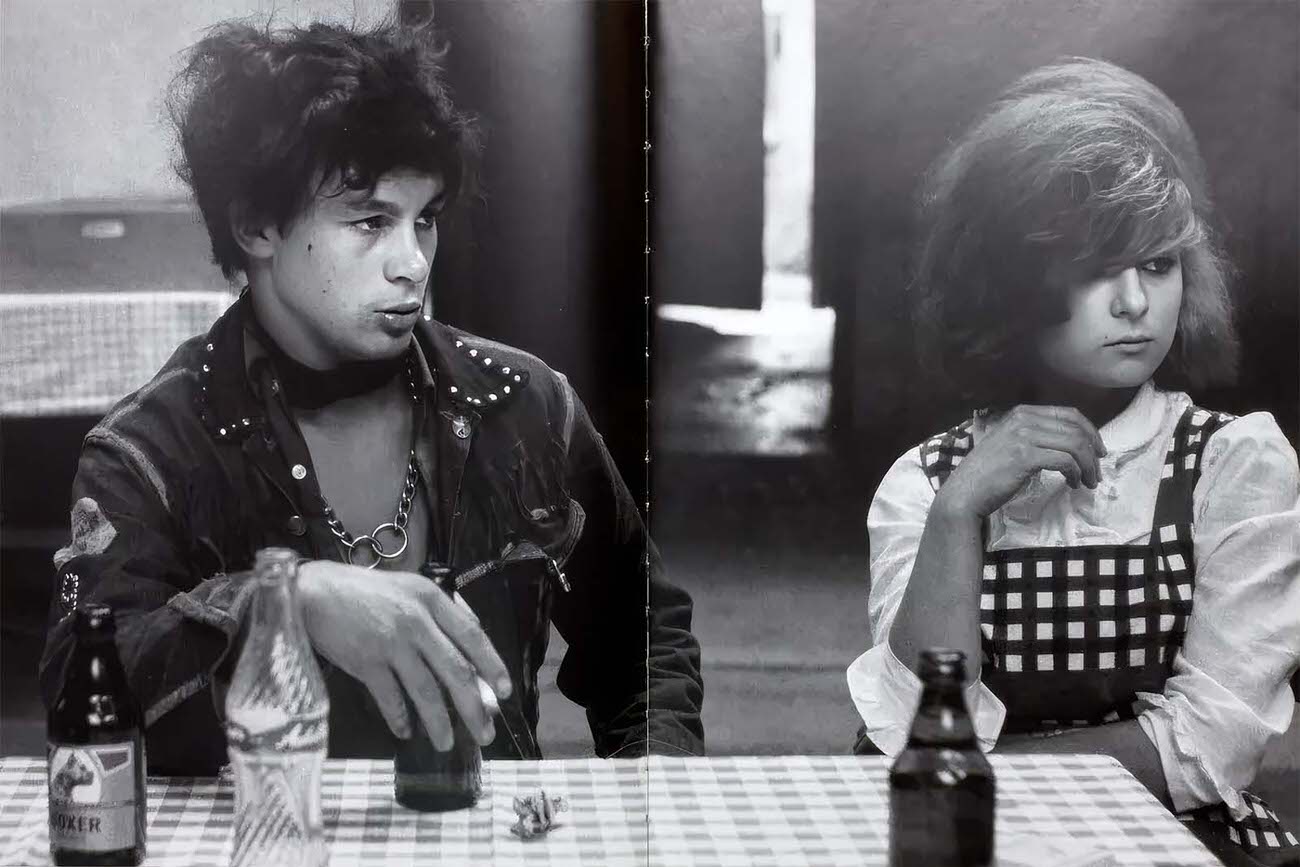
Leather, studs, and a heavy chain necklace give the young man at the table the unmistakable swagger associated with the Halbstarken—those postwar “tough kid” youths who turned clothing into attitude. His open-collared jacket and tousled hair read like a deliberate rejection of tidy respectability, while the bottles and checkered tablecloth place the scene in an everyday social space where style could be performed as much as lived.
Across from him, the young woman’s look is just as telling: soft, voluminous hair falls over one eye, and a crisp blouse under a bold checkered pinafore creates a sharp graphic contrast in monochrome. Her poised hand and sideways glance suggest a quiet self-possession, the kind of cool that doesn’t need theatrics—an intimate counterpoint to the masculine bravado often linked with youth subcultures.
Taken together, the photo works as a small social document of fashion and culture, showing how Halbstarken style drew energy from rebellion, popular music, and streetwise confidence. The framing—two figures sharing a table yet facing slightly away—adds a cinematic tension that suits the era’s fascination with youthful independence. For anyone searching vintage youth fashion, European street style history, or the origins of rebel aesthetics, this image offers a vivid, human-scale glimpse into a generation dressing itself into a new identity.