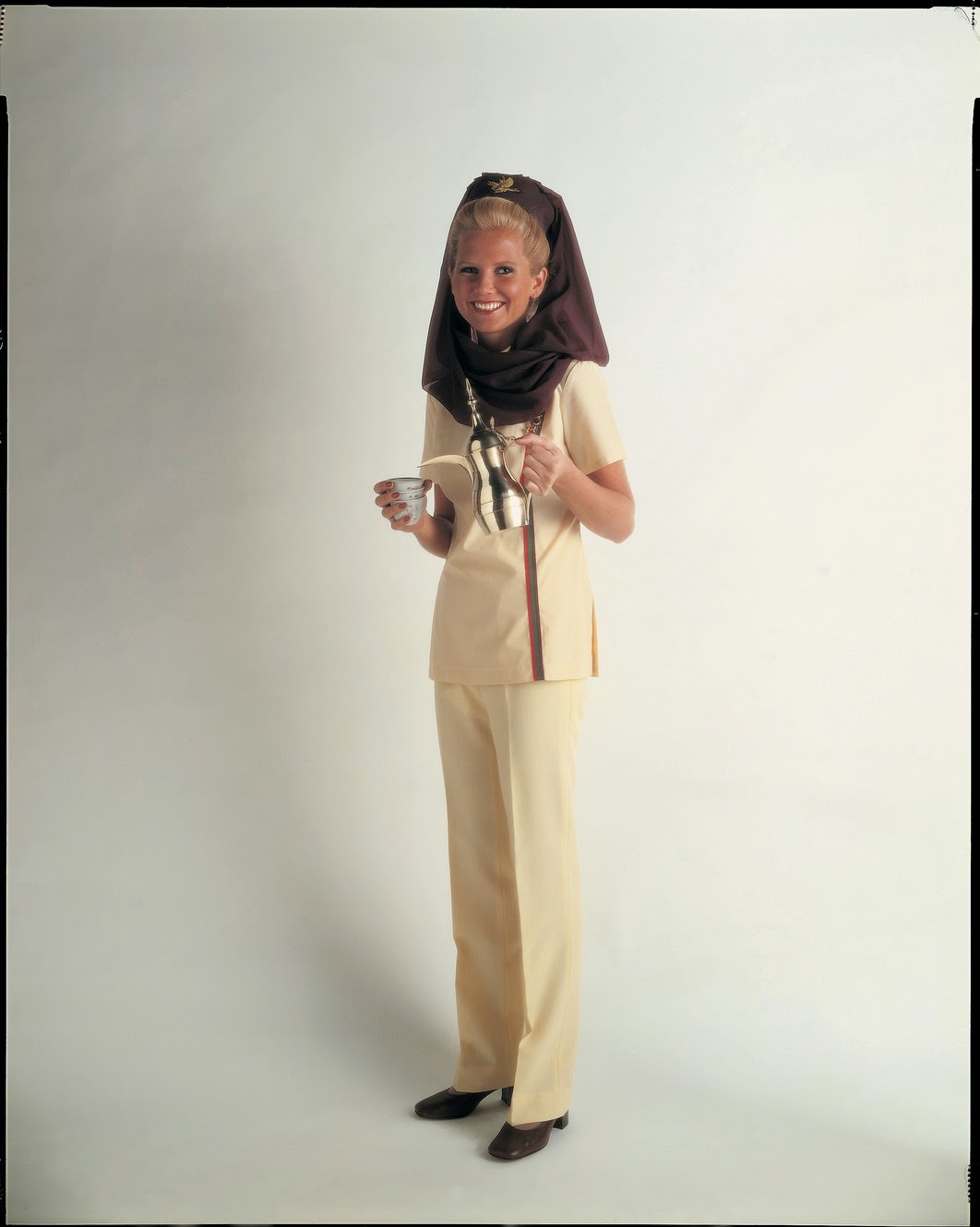
A Gulf Air flight attendant stands in a studio setting, balancing airline polish with regional symbolism: a deep-toned head covering drapes like a soft veil, while a tailored cream tunic and smart trousers keep the silhouette crisp and modern. The clean background draws attention to the uniform’s lines and color contrast, and the small emblem on the headdress signals corporate identity as clearly as any badge. In her hands, a traditional coffee pot and cup add a note of hospitality, suggesting how service rituals were woven into the airline’s public image.
In the 1970s, aviation branding often relied on fashion to communicate destination, ambition, and cultural confidence, and this ensemble reads as a deliberate meeting point between Middle East and West. Trousers—practical for cabin work and increasingly accepted in women’s professional dress—sit alongside a headscarf-inspired element adapted for an international audience. The result is neither purely “traditional” nor purely “mod,” but a carefully negotiated look meant to feel welcoming to travelers crossing borders.
Credited to designer Joy Stokes, the uniform becomes a small, wearable document of its era: global routes expanding, visual identities sharpening, and airlines turning their crews into ambassadors of style and culture. For readers exploring flight attendant fashion from the 1930s to the 1970s, this photograph highlights how fabrics, hemlines, and accessories carried cultural meaning as much as they did practicality. It’s a reminder that airline uniforms are more than dress codes—they’re storytelling tools at 30,000 feet.