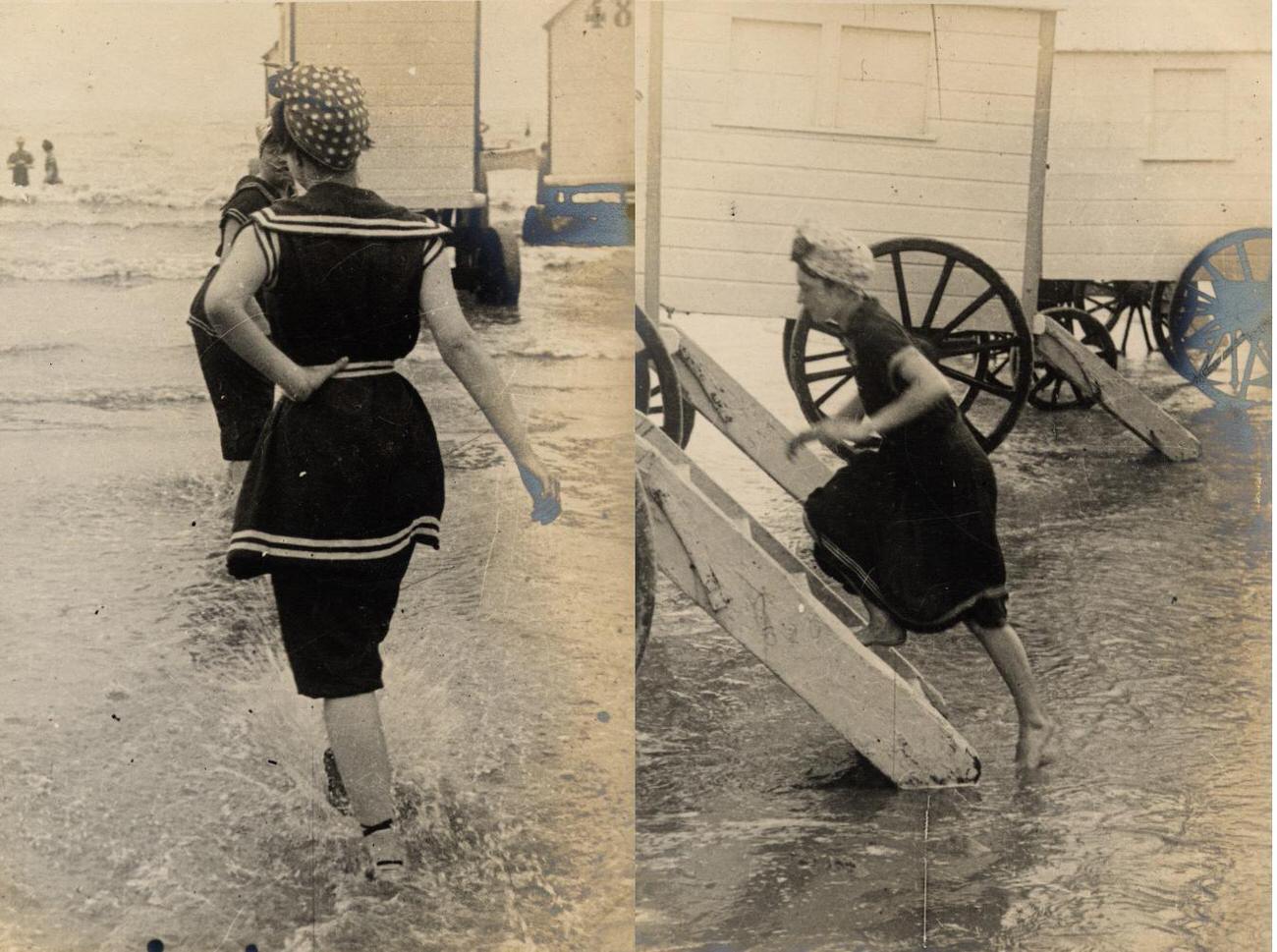
Salt water curls around sturdy stockings and hemlines as women in dark, sailor-collared bathing costumes wade into the shallows. Their headscarves are tied tight against wind and spray, and the scene balances modesty with the unmistakable thrill of a day at the sea. In the distance, more bathers dot the surf, turning the shoreline into a lively strip of leisure and ritual.
To one side stands the bathing machine, a wooden hut on wheels that could be hauled down the beach so swimmers might change in privacy and step straight into the water. Its large spoked wheels and slatted ramp hint at the practical engineering behind Victorian and Edwardian seaside customs, when propriety shaped everything from swimwear to the very act of entering the ocean. The woman caught mid-step on the ramp gives the photograph its energy, as if the camera has interrupted a quick dash between shelter and waves.
Fashion historians and cultural storytellers prize images like this for what they reveal about early beach tourism, women’s recreation, and the gradual shift toward modern swim culture. The heavy fabrics, trim detailing, and layered coverage speak to an era negotiating between decorum and freedom, while the bathing machine anchors the moment in a now-vanished technology of seaside life. As a piece of coastal social history, it offers a textured glimpse of how people once dressed, moved, and made sense of the public beach.