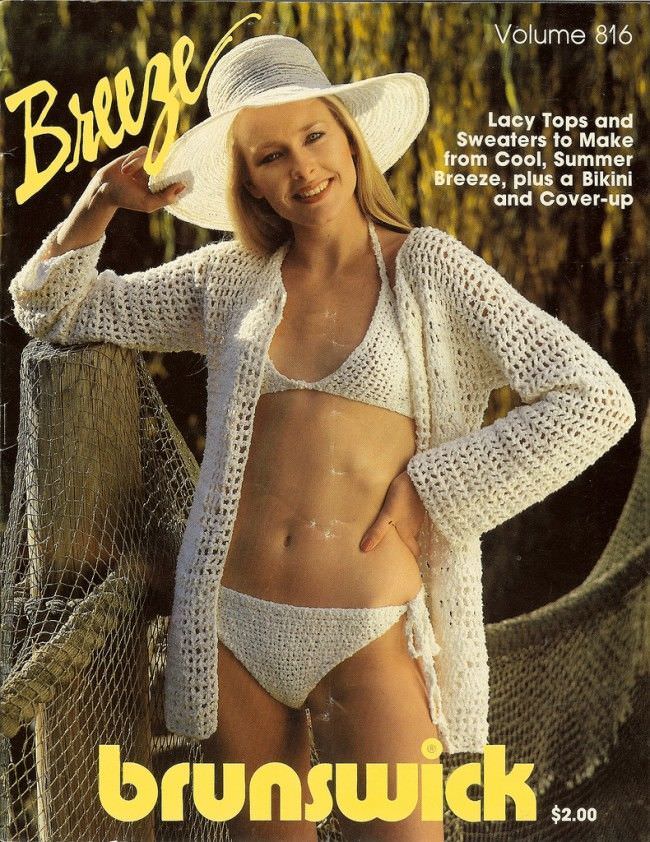
Sunlight and a wide-brimmed hat turn this knitwear cover image into a soft-focus daydream, even as the outfit itself raises practical questions. The model poses in a white crocheted bikini with a matching openwork cardigan, the chunky stitches and lacy gaps clearly meant to show skin as much as craftsmanship. Behind her, fishing netting and warm, outdoorsy tones nudge the scene toward seaside leisure, selling the idea that handmade yarn could be as breezy and modern as anything bought off a rack.
The printed copy leans hard into that promise: “Breeze,” “Volume 816,” and a pitch for “Lacy Tops and Sweaters… plus a Bikini and Cover-up,” all crowned by the bold “brunswick” logo and a $2.00 price tag. It’s an advertisement and a cultural snapshot at once, pointing to an era when crochet and knitting patterns were marketed with the same glamour once reserved for swimwear catalogs. The styling suggests a time when craft magazines weren’t just about practicality—they were about fantasy, body confidence, and the thrill of a revealing, do-it-yourself wardrobe.
Yet the title’s skepticism is part of the story, because yarn swimsuits sit right at the intersection of liberation and logistics. Crochet can stretch, sag, and grow heavy when wet, which is precisely why these designs often functioned best as poolside fashion—more cover-up and statement piece than serious swim gear. As a piece of vintage fashion ephemera, the image captures a moment when “handmade” meant daring, when beachwear flirted with macramé aesthetics, and when the promise of a knitted bikini could sell not only a pattern book, but a whole sunny attitude.