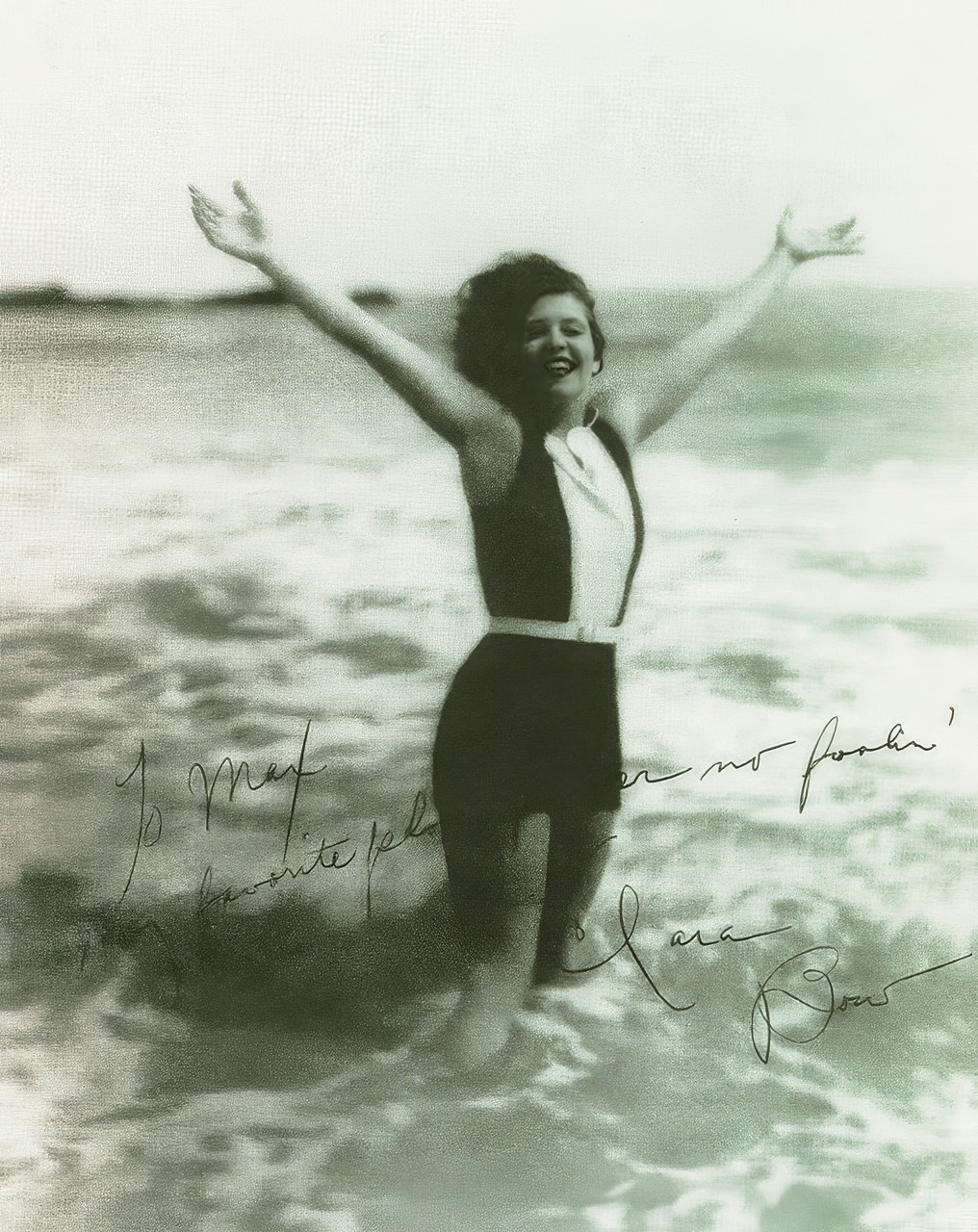
Arms flung wide against the surf, a smiling beachgoer steps into the foamy edge of the sea, her one-piece swimsuit sharply contrasting in dark and light panels. The suit’s modest cut and structured silhouette hint at an era when swimwear balanced practicality with strict ideas of propriety, even as leisure at the shore became a modern ritual. A faint handwritten note across the lower portion adds to the postcard-like feeling, suggesting the photograph once traveled as a keepsake.
Early 1900s women’s swimsuits were more than garments for swimming; they were negotiations between movement, morality, and the new public visibility of women at beaches and bathhouses. As fabrics improved and activities like seaside promenading, wading, and recreational swimming grew popular, swimsuits gradually shifted from heavy, dress-like coverage toward simpler, more body-aware designs. Details such as higher necklines, fuller shorts, and carefully placed seams reveal how designers tried to make “sport” acceptable without abandoning the era’s expectations.
Fashion and culture meet in every ripple of this scene, where joy and confidence read as clearly as any trend line. For readers exploring the history of women’s swimwear, this photograph offers a vivid anchor: the ocean as backdrop, the swimsuit as statement, and the pose as proof that changing styles also changed how women occupied public space. Consider it a starting point for tracing the evolution of bathing beauties—from conservative early silhouettes to the streamlined looks that followed.