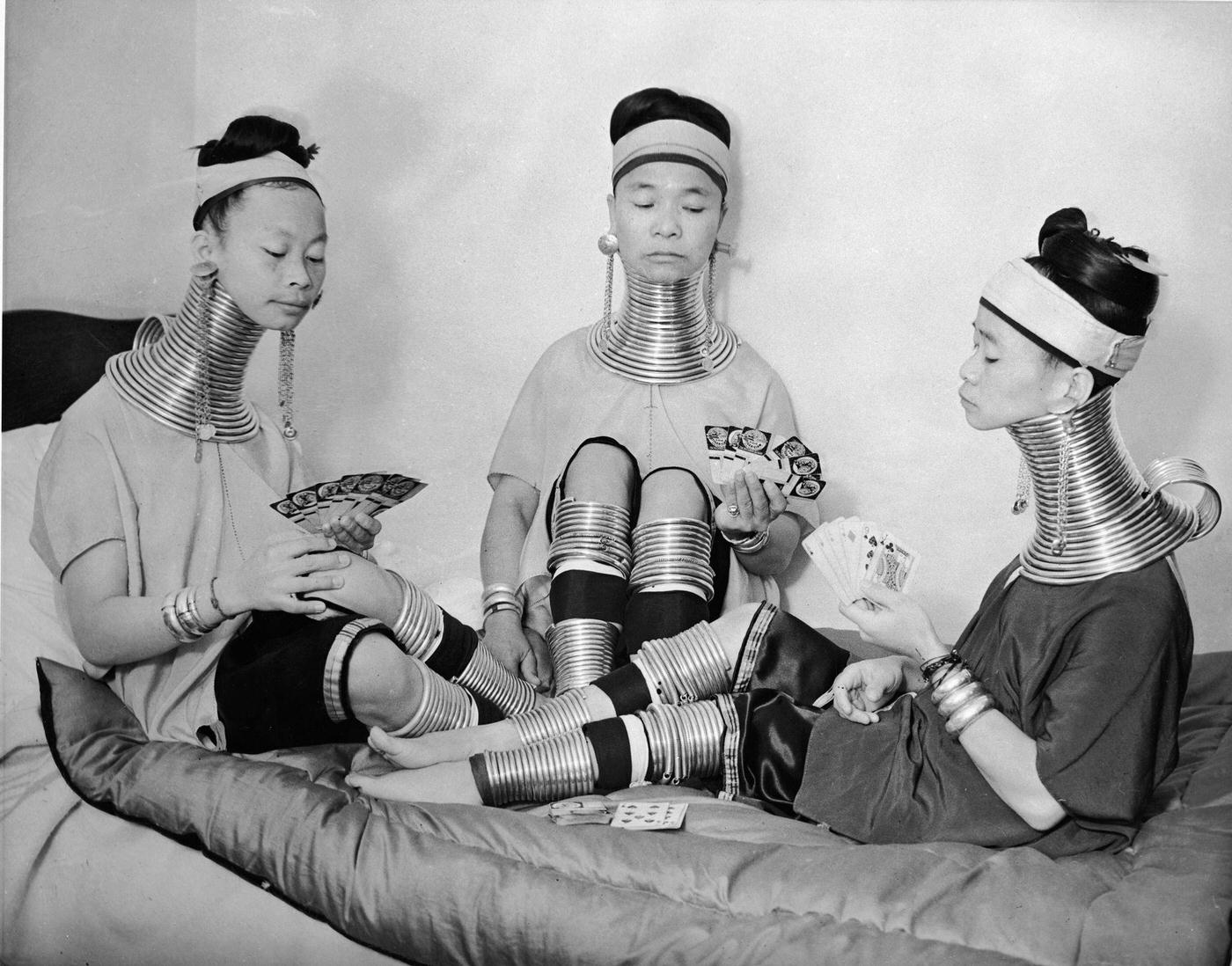
Against a plain wall, three Burmese women sit close together on a low bed, absorbed in a quiet game of cards. The scene feels intimate and unguarded: one studies her hand with a downward gaze, another holds her cards in a loose fan, and the third watches the play with a calm, practiced stillness. Their simple dresses and headbands keep the focus on the ritual of the game and the human rhythms of waiting, choosing, and bluffing.
The most striking detail is the brilliant metalwork encircling their bodies—stacked brass neck coils rising toward the jaw, matched by heavy rings layered along calves and forearms. Light skims across the polished bands, turning each curve into a bright highlight and giving the women a sculptural presence even as they relax. In 1930s London, such adornment would have been read through the lens of spectacle, yet the photograph also insists on everyday gestures: fingers pinching cards, wrists resting, a foot tucked beneath a knee.
Taken from a circus context, the image sits at the crossroads of fashion, culture, and the history of display, when performers from colonized regions were routinely marketed as “exotic” attractions to Western audiences. The title points to 1935, and that date matters: between the interwar years and the height of mass entertainment, publicity photographs often staged performers in domestic-looking moments to make them seem both extraordinary and approachable. What lingers is the tension between public presentation and private life—three women briefly out of character, playing cards, while the very symbols used to define them remain impossible to forget.