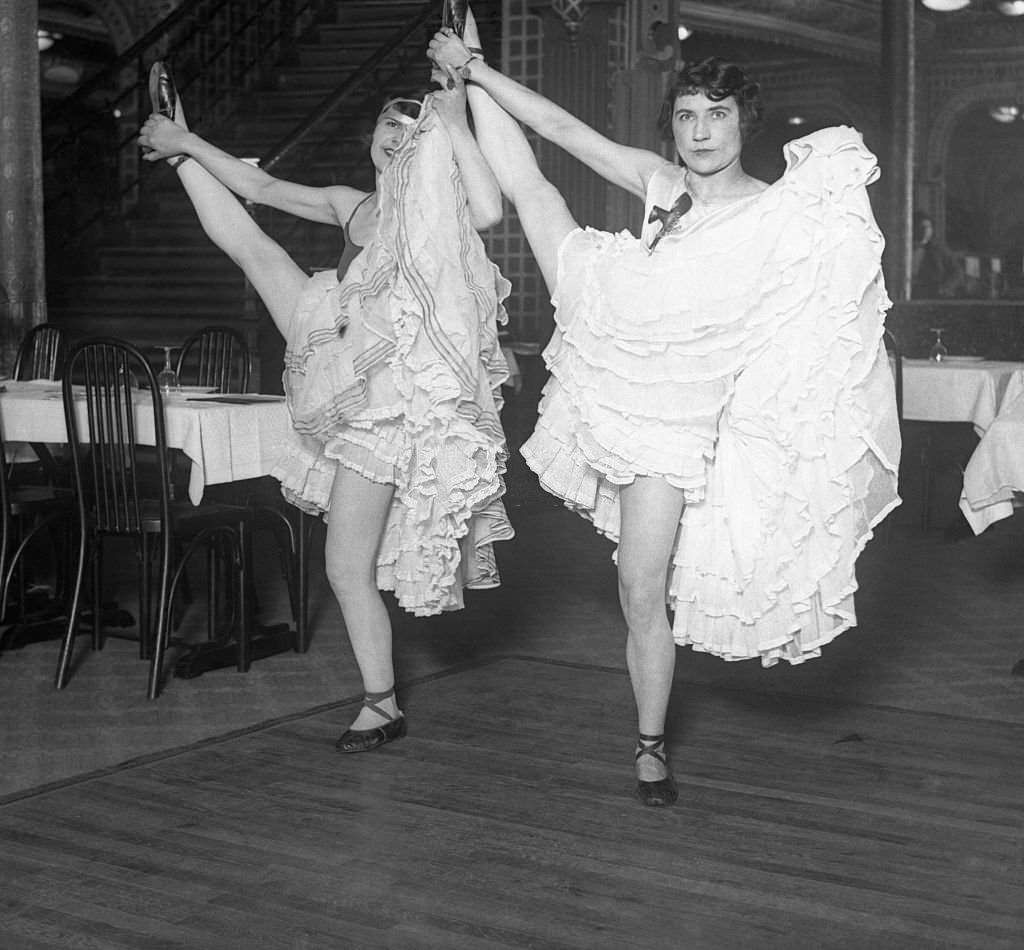
Mid-kick and perfectly balanced, two cancan dancers hold their legs high while gripping the edges of their layered skirts, turning fabric into a fluttering frame around the athletic pose. Ruffled petticoats spill in bright tiers, and sturdy strapped dance shoes anchor the movement to the wooden floor. Behind them, neatly set tables and rows of bentwood chairs suggest a café-concert or music-hall interior where dining, drinking, and spectacle shared the same room.
In 1904 the cancan still carried the thrill of something “wicked” in polite conversation, a reputation built on exuberant energy, teasing flashes of stockings, and a brazen refusal to stay decorous. The dance demanded more than cheek—it required flexibility, stamina, and timing, as performers snapped through high kicks and held poses that read as both strength and play. Tourists flocked to such entertainments precisely because they promised a carefully staged glimpse of nightlife daring, packaged for an audience hungry for modern pleasures.
Fashion and culture meet in every detail here: the voluminous skirts engineered for dramatic lifts, the visible layers that transformed motion into spectacle, and the confident, direct gaze of a performer who knows the room is watching. The setting’s polished architecture and orderly seating contrast with the dance’s controlled chaos, underscoring how the era’s entertainment venues domesticated rebellion and sold it by the ticket. As a piece of early 20th-century performance history, the photograph preserves the cancan’s mix of provocation and professionalism—the very combination that made it a must-see attraction.