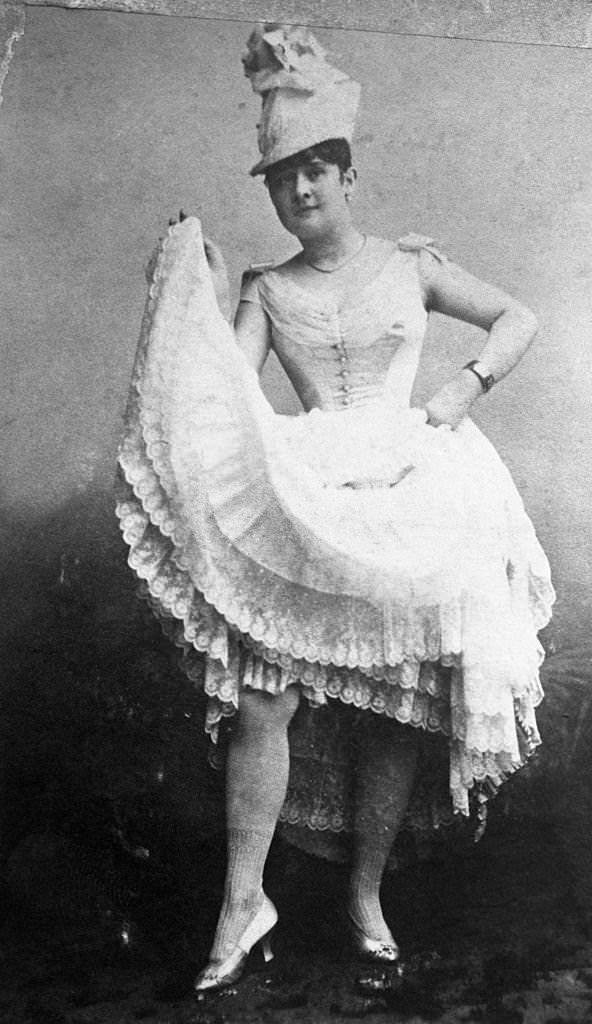
Ruffles and lace spill outward as a can-can dancer lifts her skirt in a practiced flourish, holding a poised stance that hints at the explosive kicks to come. The studio-style backdrop keeps all attention on the costume’s layered hem, the fitted bodice with its neat front fastenings, and the tall hat that adds a touch of theatrical bravado. Even in a still photograph, the pose suggests the can-can’s blend of precision and provocation—showmanship built from stamina, timing, and fearless balance.
At the Bal Tabarin in Paris, this kind of stage-ready presentation helped define turn-of-the-century nightlife, where cabaret and dance halls turned movement into spectacle. The can-can had long been associated with modern urban energy, and images like this circulated that reputation beyond the floorboards, offering audiences a glimpse of the performers’ carefully constructed allure. The combination of high-heeled shoes, stockings, and frothy skirts speaks to a visual language designed to read instantly under gaslight and attention alike.
Behind the playful lift of fabric lies a demanding craft, one that required strength to repeat leaps and legwork night after night while maintaining a bright, unruffled expression. Fashion and culture meet here in the details: practical corsetry shaping a dramatic silhouette, decorative trim amplifying motion, and accessories signaling a persona as much as a dancer. As a historical photo tied to Paris in 1900, it preserves a vivid fragment of cabaret history and the enduring iconography of the can-can.