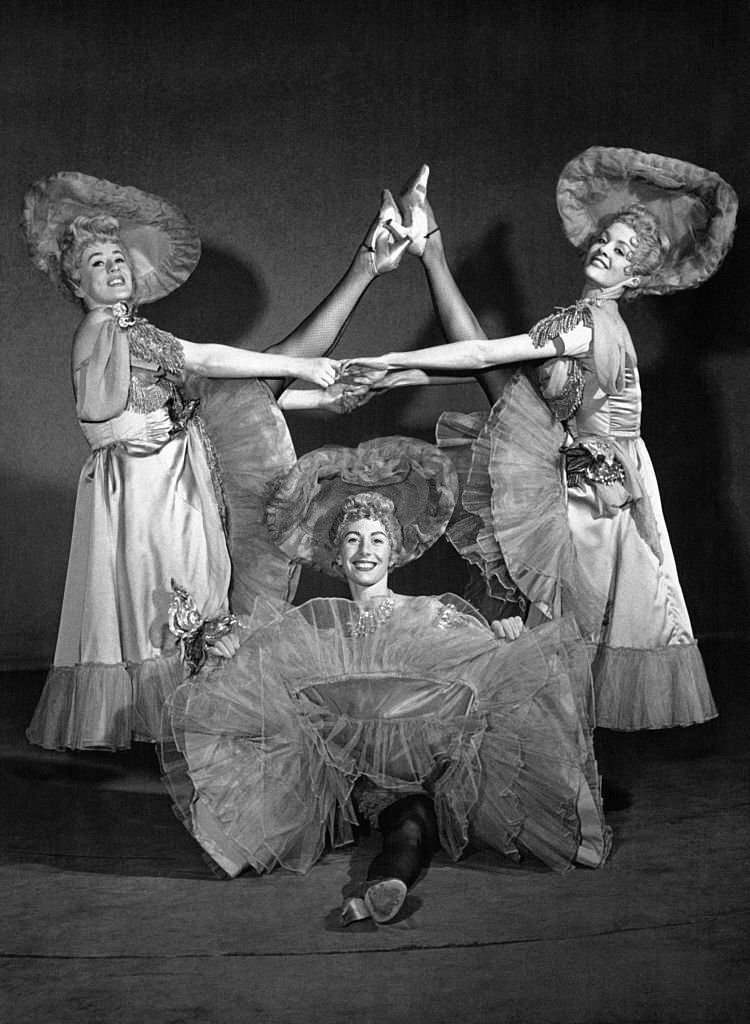
Locked in a playful tableau, three cancan dancers form a living triangle of satin, lace, and bright stage smiles. Two stand on either side in wide-brimmed hats, arms extended as they clasp hands across the center, while the third anchors the composition below, framed by a billow of ruffled skirts. The dramatic leg line at the top—pointed toes held high—signals the athletic precision behind the famous “kick” that audiences came to expect from a quick French Cancan number.
Costume details do much of the storytelling: layered petticoats, gathered bodices, and decorative trim designed to catch the light as the dancers spun and snapped through rapid steps. Even in a posed moment, the photograph advertises movement, with fabric fanned like a stage curtain and the performers’ posture suggesting rehearsed strength. The setting is minimal, keeping attention on the choreography and the carefully constructed spectacle of music-hall entertainment.
Billed as a highlight of the show, the cancan here reads as both fashion and cultural history—an enduring symbol of nightlife bravura and the era’s taste for bold performance. The image emphasizes camaraderie as much as showmanship, presenting the dancers as a coordinated unit rather than solo stars. For anyone searching early cancan dance history, French music-hall costume, or turn-of-the-century stage culture, this portrait captures how energy, elegance, and marketing converged in a single theatrical pose.