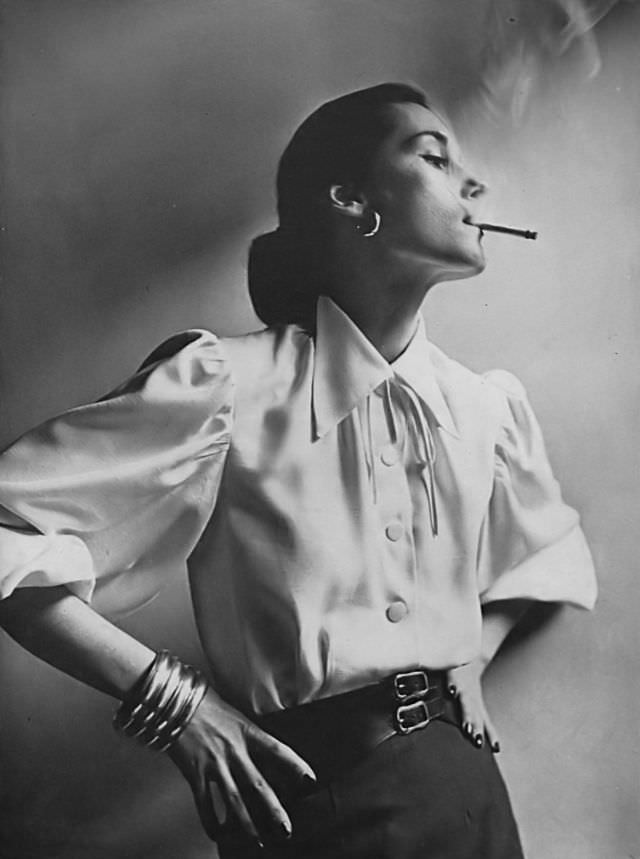
A poised model turns in profile, chin lifted into a ribbon of cigarette smoke, while a silk shantung blouse catches the studio light with a crisp, tactile sheen. The extravagantly full sleeves balloon from the shoulder into structured softness, balanced by a sharp pointed collar and a tidy line of covered buttons. Hoop earrings and a stack of bangles lend a metallic glint, and the hands-on-hips stance pushes the garment forward as both fashion statement and attitude.
From Vogue’s 1946 style world, the look speaks to a postwar hunger for drama and refinement, where volume returned and tailoring asserted itself after years of restraint. Shantung’s subtle slubs and stiffness make it ideal for sculptural sleeves, and the blouse’s architecture plays against the darker high-waisted bottom secured with a double-buckle belt. The cigarette, then a common prop in editorial imagery, reinforces a mood of modern confidence and a slightly rebellious glamour.
In the broader story of 1940s fashion photography, the composition relies on clean background space, strong angles, and a controlled contrast that turns fabric into form. The frame prioritizes silhouette—shoulders, collar, cuffs—so the blouse reads instantly as a luxury piece, even in monochrome. For historians and vintage style enthusiasts alike, this Vogue image remains a vivid reference for mid-century couture sensibility, material culture, and the era’s evolving portrait of feminine independence.