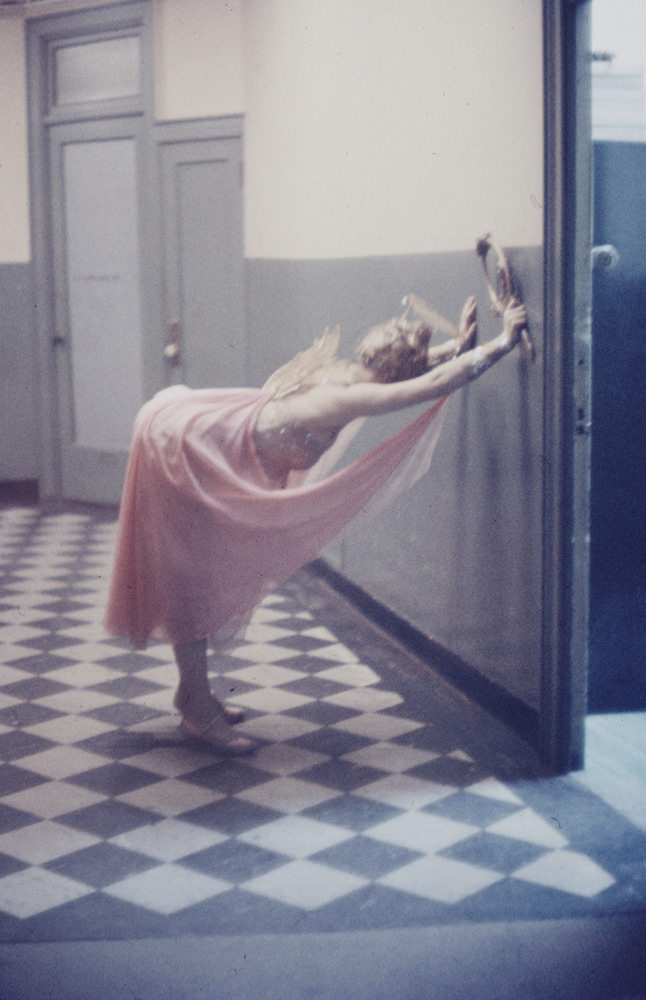
Backstage glamour rarely looks like this: a lone dancer in a soft pink costume leans forward in a quiet corridor, arms stretched toward a door as if stealing one more breath before the lights call her back. The checkered floor and plain, institutional walls feel worlds away from a New York nightclub’s sparkle, yet they’re part of the same story—where showgirls in 1958 moved between fantasy onstage and the unvarnished spaces that kept the show running.
Past the feathers and sheer fabric, the pose suggests fatigue, focus, and discipline, the hidden labor behind a “effortless” routine. Dressing rooms and hallways were where bodies were warmed, sore muscles worked out, shoes adjusted, and nerves managed, often under tight schedules and constant scrutiny. In a single frame, the tension between performance and endurance comes through: beauty crafted in motion, maintained by work.
Fashion & Culture in mid-century nightlife wasn’t only about sequins and spotlight; it was also about the everyday realities that shaped a working dancer’s life—backstage rituals, physical strain, and the private moments that never made it to the audience. This post explores what life was really like for showgirls in 1958 New York nightclubs, using the image’s intimate atmosphere to ground the era’s mythic glamour in something human, tactile, and real.