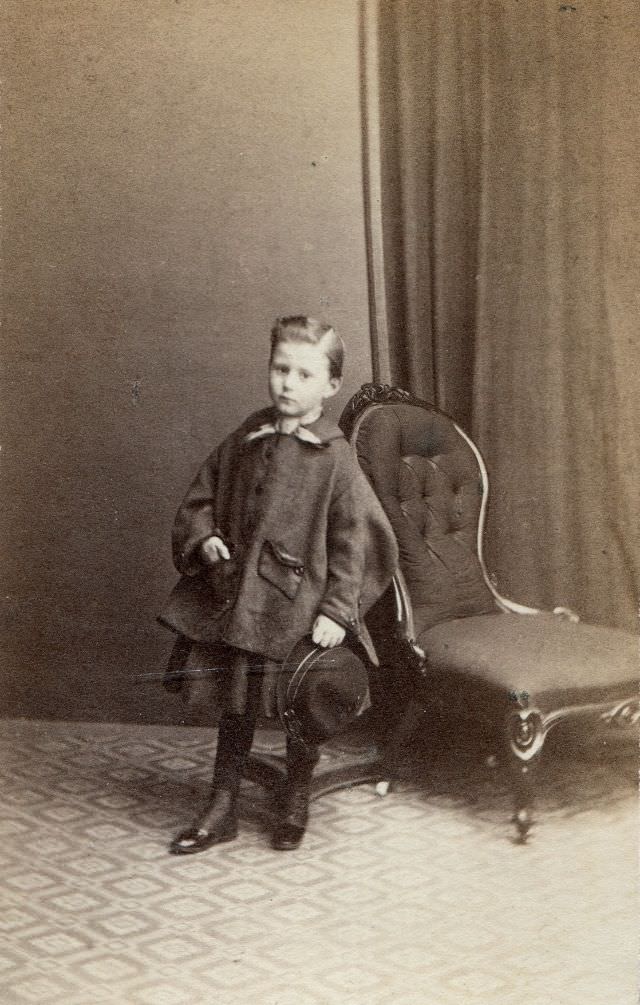
A small boy stands in a studio interior beside an ornate upholstered settee, posed with the practiced stillness early photography demanded. His outfit reads as unmistakably Victorian: a neat, buttoned coat with generous pockets, a crisp collar at the neck, and sturdy dark stockings with polished shoes. Even in this simple portrait setting—plain backdrop, patterned carpet, and heavy drapery—the clothing does most of the storytelling, signaling tidiness, respectability, and family pride.
Look closely at the proportions and structure of the garments and you can see how Victorian-era fashion shaped childhood into a miniature version of adulthood. The coat’s tailored lines and high, orderly neckline emphasize formality, while the short hem and youthful silhouette keep it firmly in the realm of children’s dress rather than a man’s suit. Details like the large buttons, practical pockets, and carefully arranged hair suggest a culture that valued discipline and presentation, especially when a child was being recorded for posterity.
For anyone exploring what little boys wore during the Victorian era, this portrait offers a clear window into everyday fashion and social expectations: layered clothing for warmth, dark hosiery for modesty, and well-made footwear meant to last. The furniture and studio props add a subtle note of middle-class aspiration, but it’s the outfit that anchors the image in “Fashion & Culture,” showing how clothing communicated age, upbringing, and status. In its quiet way, the scene reminds modern viewers that children’s clothing once carried the same weight of etiquette and identity as adult dress.