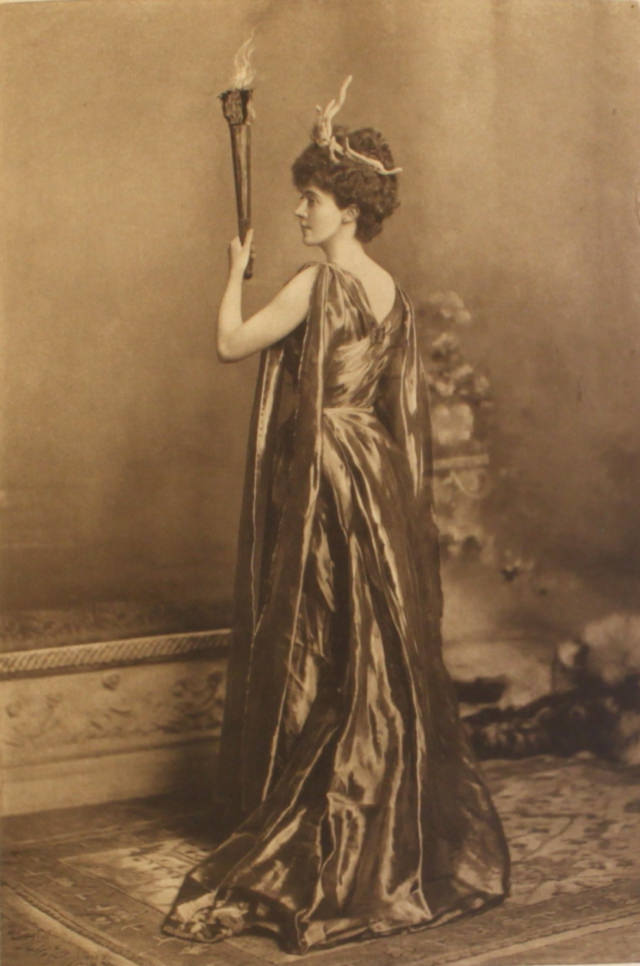
Turned in profile and framed against a softly painted studio backdrop, Lady Lurgan adopts the poised stillness of a society portrait while wearing the guise of Alecto, one of the Furies of classical myth. A torch rises in her right hand, its small flame and curling smoke adding a theatrical spark to the otherwise hushed, sepia-toned scene. The costume’s gleaming fabric falls in long, liquid folds, reading as ancient drapery through a late-Victorian lens.
Rather than the terror promised by the epithet “implacable anger,” the expression and posture feel composed—almost gentle—an effect heightened by the careful arrangement of hair and the delicate headpiece that suggests stylized flames or plumes. Light catches the satin-like gown and cape, emphasizing texture and movement, while the fitted bodice and trailing hem betray the era’s fashion beneath the classical inspiration. Even the torch, a prop of menace or judgment in myth, becomes an elegant accessory in the hands of an evening guest.
Such images from the Devonshire House Ball speak to the late 19th century’s fascination with antiquity, pageantry, and self-invention, when aristocratic fancy dress turned literature and legend into wearable spectacle. In a single frame, mythological symbolism, high-society portraiture, and costume design converge—ideal for anyone searching the history of fancy dress, Victorian ball culture, or the enduring revival of Greco-Roman themes in fashion. The result is Alecto rendered not as a wrathful avenger, but as a striking, controlled vision of classical drama made suitable for the ballroom.