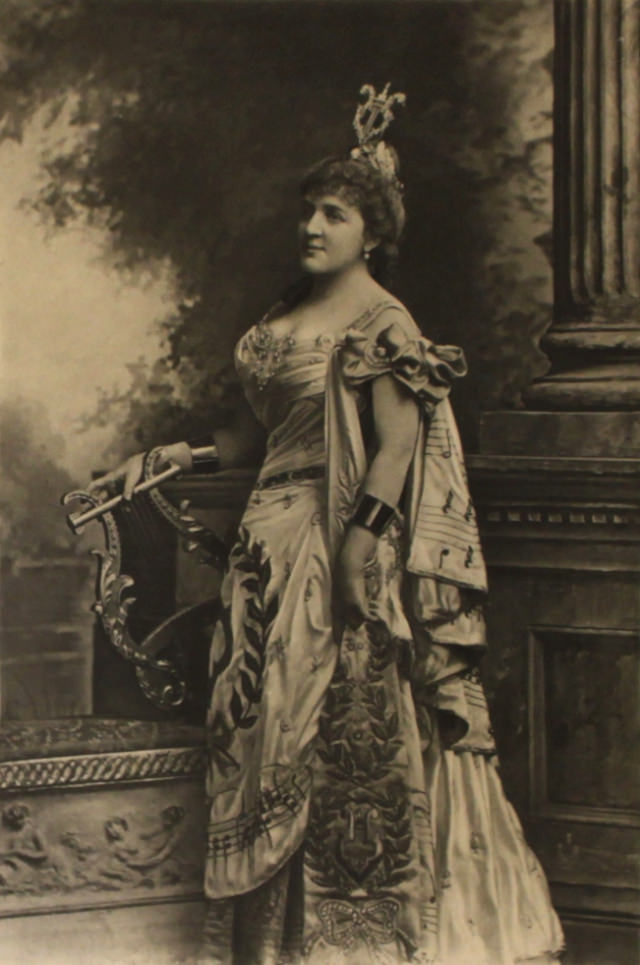
Poised in three-quarter profile against a painterly studio backdrop, Mrs Ronalds appears in the role of Euterpe, the classical Muse of music, dressed for the famed Devonshire House Ball of 1897. The portrait’s soft lighting catches the sheen of her gown and the sculptural drape of fabric across her bodice, giving the costume an almost stage-like grandeur. A decorative column and carved furnishings at the edge of the set heighten the sense of aristocratic pageantry typical of late-Victorian society photography.
The costume itself is built from clues meant to be “read” at a glance: musical notes and staves are worked into the textiles, while the styling suggests antique inspiration filtered through 1890s fashion. An ornate headpiece rises above her coiffure like a symbolic crown, and her accessories—bracelets, ribbons, and carefully arranged folds—turn allegory into wearable spectacle. Even the way she rests her hand near a harp-like motif reinforces the identity of a figure associated with melody, rhythm, and cultivated artistry.
Behind the elegance lies the wider cultural story of fancy-dress balls, where guests showcased learning, taste, and social rank through historical and mythological disguise. Portraits like this were more than souvenirs; they were visual declarations of refinement, circulated and collected as evidence of belonging within elite circles. For modern viewers searching Victorian costume history, Devonshire House Ball photographs, or Fashion & Culture of the 1890s, this image offers a richly detailed example of how music, mythology, and high society were stitched together in one unforgettable ensemble.