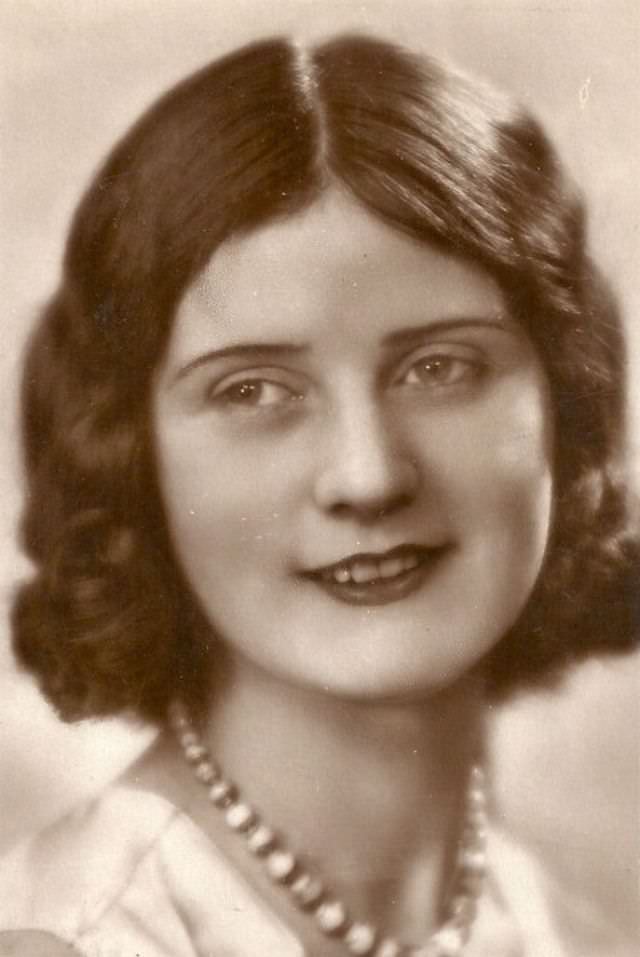
Vera Curran, introduced here as Miss Ireland, appears in a softly lit studio portrait that leans into the glamour ideals associated with European beauty contests of the era. Her hair is styled in a neat center part with gentle waves framing the face, and the close crop draws attention to her calm gaze and carefully shaped brows. A strand of pearls and a light blouse complete the look, suggesting polished elegance without excess.
The photographic treatment—smooth focus, even tonal range, and a warm sepia cast—signals the period’s preference for flattering retouching and romantic atmosphere. Subtle lipstick and a poised half-smile reflect the interwar shift toward modern cosmetics and camera-ready presentation, where personal charm was curated as much as it was captured. The plain background keeps the viewer fixed on expression and styling, hallmarks of classic portrait photography.
As part of the wider “Miss Europe” culture often associated with the 1930s, this image sits at the crossroads of fashion, popular culture, and national representation. Beauty pageants offered a public stage for evolving ideas of femininity, refinement, and modern identity, and portraits like this helped circulate those ideals in newspapers, magazines, and promotional materials. For anyone searching vintage beauty queen photography, 1930s fashion portraits, or Miss Ireland history, Vera Curran’s portrait remains a striking example of the era’s visual language.