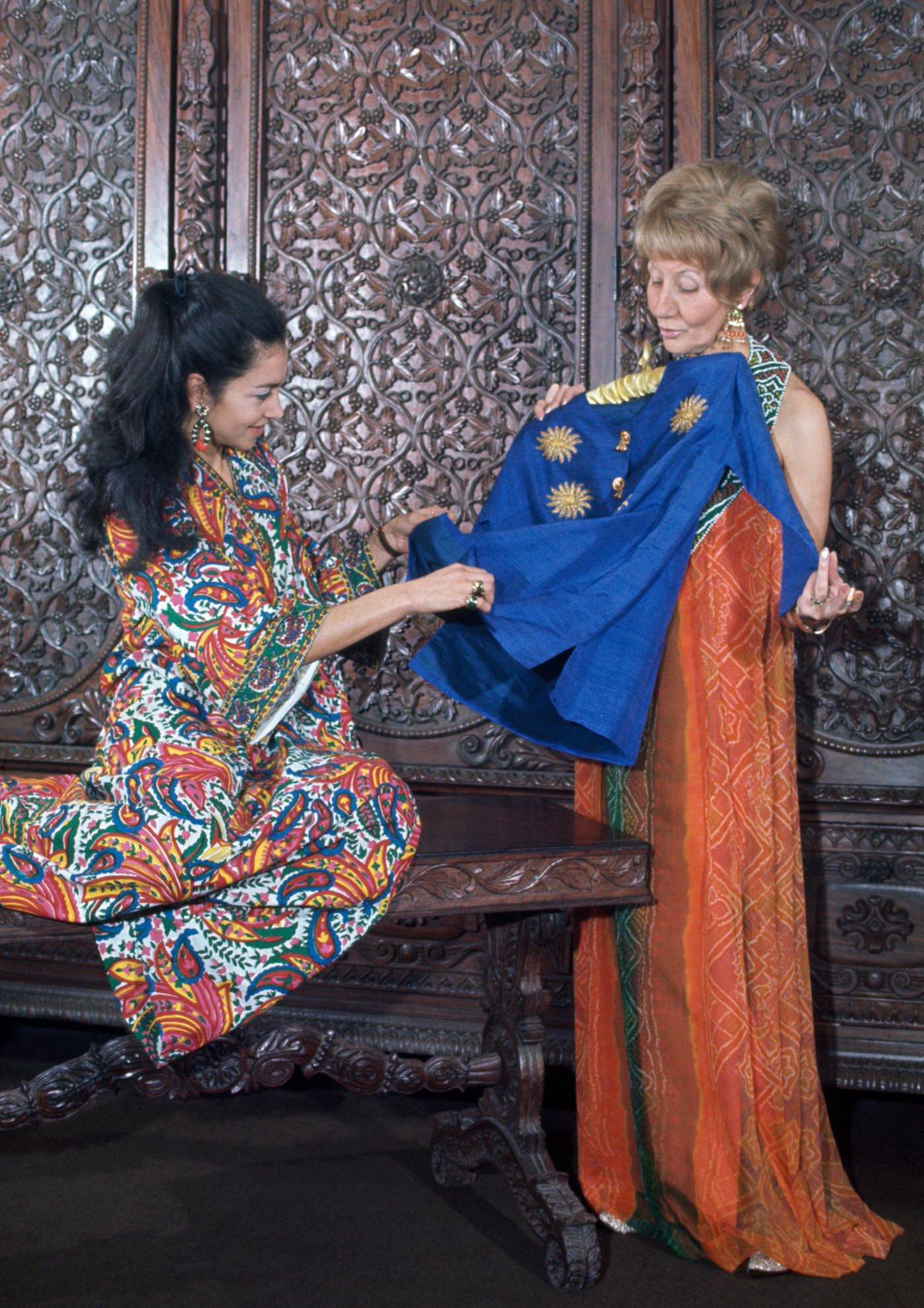
Against an intricately carved wooden screen, two women pause in a London boutique scene associated with 1966, letting fabric and color take center stage. One wears a sweeping orange halter-neck dress that falls in long, fluid lines, its warm tones echoing the era’s appetite for bold, unapologetic hues. Beside her, the other woman sits in a loose kaftan patterned with swirling, psychedelic florals, a print-heavy statement that reads instantly as mid-1960s bohemian style.
Their attention is on a rich blue garment held between them, decorated with small sunburst-like motifs and fastened with bright buttons. The seated woman’s hands pinch and smooth the cloth as if checking drape and finish, while the standing woman presents it at chest height, her jewelry catching the light in a way that complements the boutique’s theatrical, dress-up mood. The pairing of saturated blue, fiery orange, and kaleidoscopic print captures the visual language of early hippie fashion—comfort and extravagance sharing the same rack.
More than a simple shopping moment, the photograph speaks to London’s growing love affair with global-inspired textiles and relaxed silhouettes that challenged the neat conventions of postwar dressing. Kaftans and halter dresses offered freedom of movement and a sense of personal reinvention, popular in fashion and culture as youth-driven style began to reshape the high street. For anyone searching the history of 1960s London fashion, boutique culture, or psychedelic hippie clothing, this image preserves the tactile reality of the trend: people handling garments, comparing colors, and turning style into lived experience.