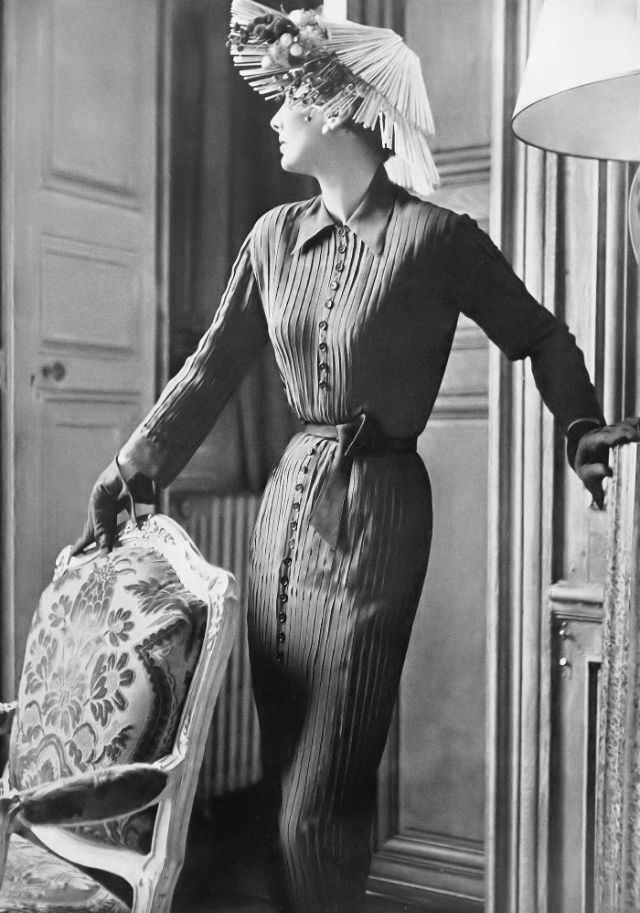
Poised in profile beside a tall window, Barbara Goalen turns her head toward the light, letting the crisp architecture of the room frame her silhouette. An ornate upholstered chair and paneled walls suggest an elegant interior, while her dramatic, sculptural headpiece adds a note of theatrical couture to the scene. The overall effect is one of controlled glamour—an editorial moment that feels both intimate and meticulously staged.
Her shirtdress, described as bright navy chiffon by Christian Dior, relies on refined construction rather than excess: stitched-down pleats run in disciplined lines across the bodice and skirt, drawing the eye to the buttoned front and the cinched waist. Long sleeves and a softly structured collar lend a tailored seriousness, while the fabric’s movement is implied in the gentle fall of the skirt and the way the pleats catch shadow. Even in monochrome, the interplay of texture and light sells the promise of color, craftsmanship, and mid-century luxury fashion.
Set in 1950, the photograph speaks to the postwar appetite for polish and new femininity, when couture houses and fashion magazines helped define the look of modern sophistication. Goalen’s confident stance—one hand braced, the other resting on the chair—captures the era’s ideal of the model as both mannequin and personality, presenting clothing as a way of life. For historians of style and collectors of Dior imagery, it remains a vivid portrait of 1950s fashion culture: precise pleating, impeccable fit, and a narrative of elegance built into every seam.