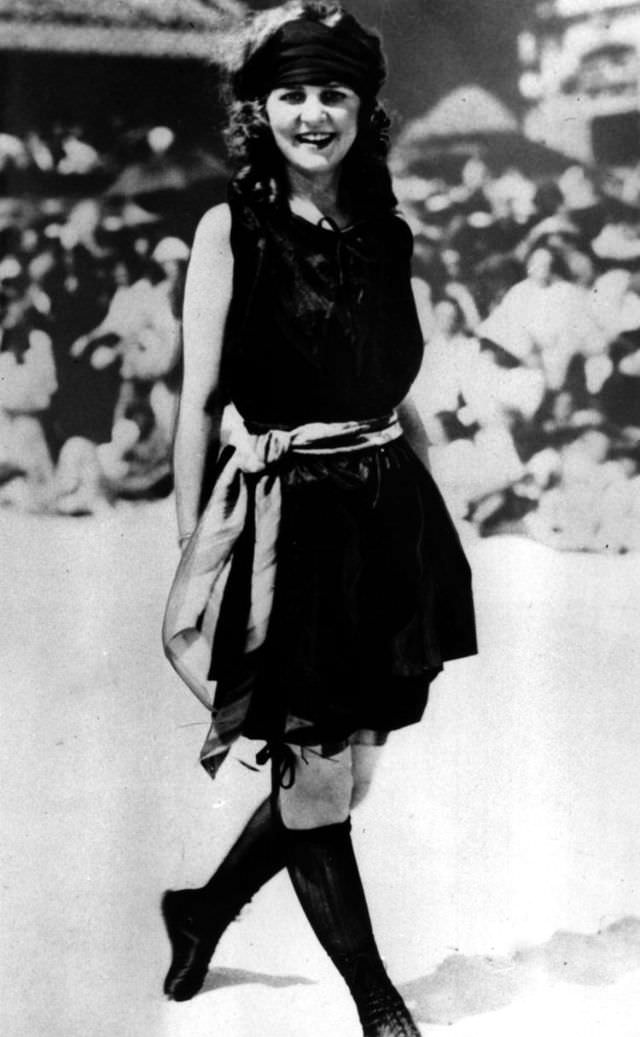
Margaret Gorman steps forward on the Atlantic City sand with an easy smile, dressed in a dark, sleeveless beach outfit cinched by a light sash tied at the hip. A close-fitting cap frames her bobbed curls, while tall, dark stockings and lace-up shoes complete a look that feels both sporty and stage-ready. Behind her, the beach blurs into a dense summer crowd, hinting at the spectacle gathering around this new kind of public entertainment.
The title connects the scene to the first Miss America pageant in 1921, when seaside tourism, mass media, and changing ideas of modern womanhood converged on the boardwalk. Rather than evening gowns and spotlights, the setting is open air and informal, emphasizing physical poise and presentation in a way that matched the era’s fascination with health, leisure, and fashion. The photograph’s soft focus and high contrast lend it the texture of early-20th-century press imagery, made to circulate widely and sell the excitement of the event.
As a piece of fashion and culture history, the image captures pageantry in its early, experimental phase—part bathing-beauty contest, part promotional postcard for Atlantic City’s end-of-summer crowds. Gorman’s confident stance and carefully coordinated accessories show how quickly these competitions translated personal style into public identity. For anyone researching Miss America origins, 1920s beachwear, or the rise of American celebrity culture, this portrait offers a vivid glimpse of glitz, glamour, and grit at the shoreline.