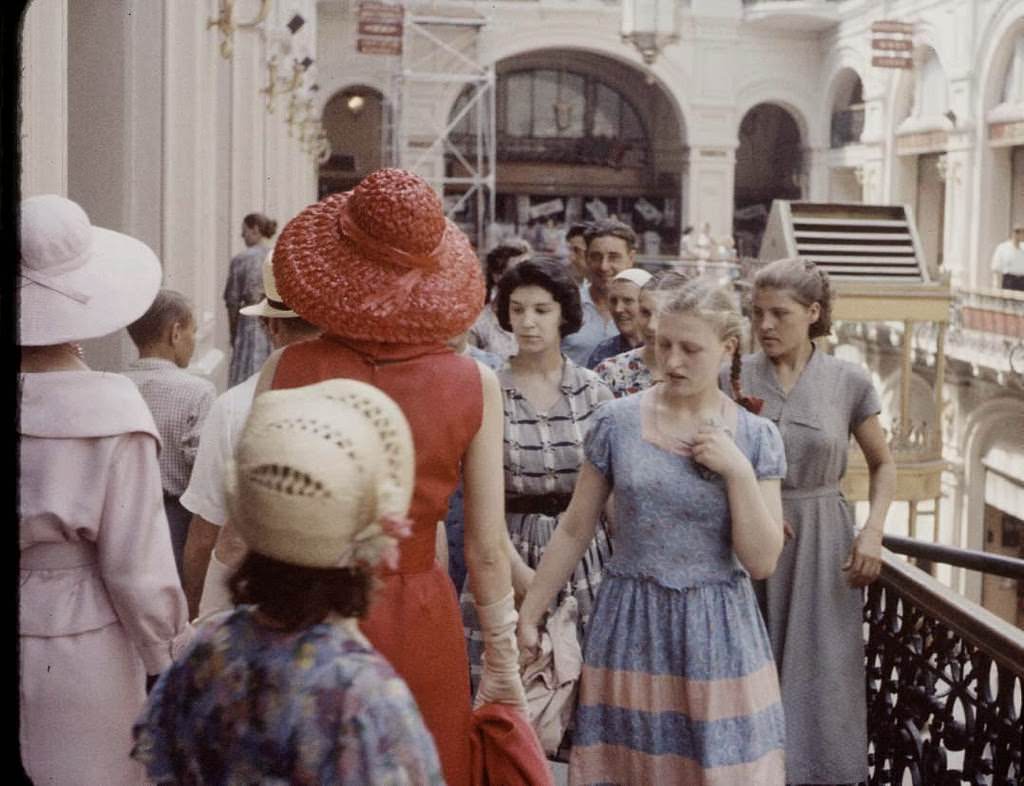
A swirl of summer hats and tailored silhouettes moves through a grand Moscow arcade, where arched corridors and bright shopfronts set the stage for an unexpected encounter with Western couture. In the foreground, a woman in a vivid red dress and wide-brimmed hat cuts a striking line amid everyday dresses and practical streetwear, turning a routine stroll into something closer to a runway. The scene feels bustling yet intimate, as curious faces register the novelty of high fashion appearing in a place more associated with uniformity than spectacle.
What makes 1959 so electrifying in the fashion history of the USSR is the collision of worlds happening in plain sight: elegance as a public event, and style as a quiet form of conversation. The onlookers’ expressions—side glances, measured attention, a momentary pause—suggest not just interest in clothes, but a sudden awareness of different possibilities of taste, femininity, and self-presentation. Against the orderly architecture, Dior’s influence reads as movement, color, and confidence threading through the crowd.
For readers drawn to Cold War culture, Soviet street life, and the global story of Dior, this photograph offers more than a fashionable snapshot—it’s a document of cultural exchange at ground level. The details invite close looking: the contrast between structured couture lines and modest day dresses, the language of accessories, and the way a public space becomes a theater of modernity. Seen today, Moscow’s 1959 “fashion shock” hints at how quickly an image, a garment, or a single walk through town could ripple into myth.