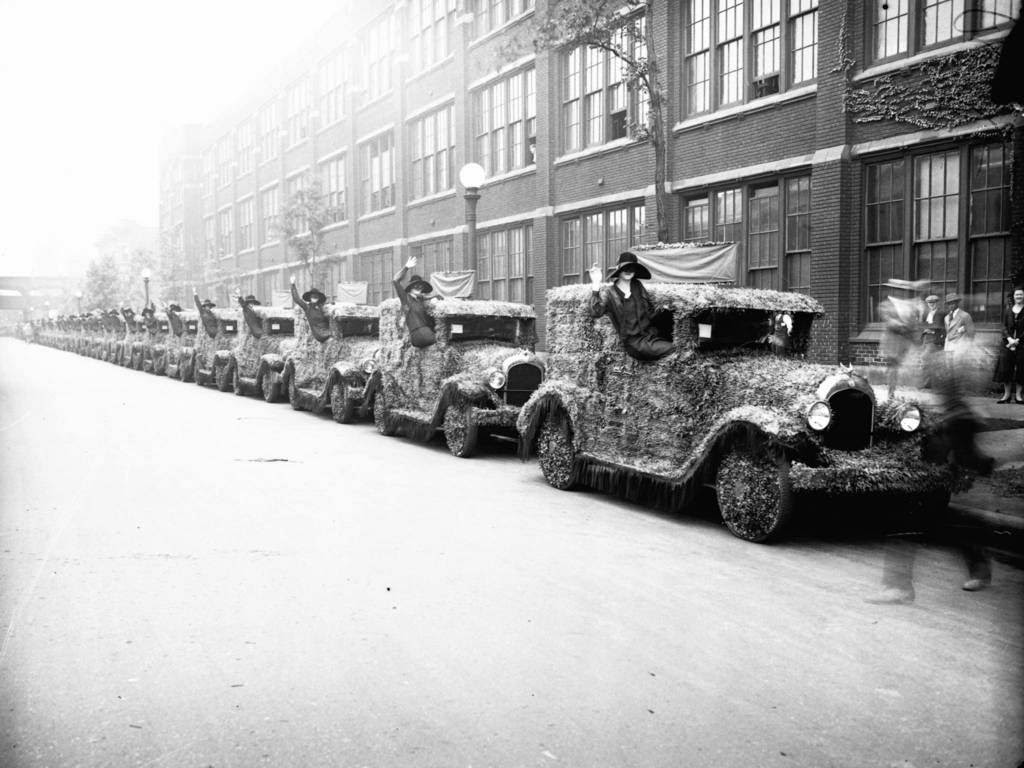
A long line of automobiles rolls down a city street, each one nearly swallowed by dense floral coverings that turn metal bodies into moving garden walls. Women ride high in the open tops, waving to the sidewalk as hats and loose, modern silhouettes hint at the flapper-era mood. Behind them, tall brick buildings and repeating windows create an urban backdrop that makes the flower-draped parade feel even more extravagant.
In 1926, a Chrysler Parade like this functioned as both spectacle and advertisement—technology dressed up as pageantry, with beauty queens as the celebrated guests. The flowerwork softens the hard edges of early cars and frames the riders as living symbols of style, confidence, and the decade’s fascination with glamour. Even without hearing the crowd, the synchronized procession suggests a carefully staged celebration meant to be seen, photographed, and remembered.
Fashion and culture collide here in a single frame: mass-produced cars, public performance, and the growing power of women’s visibility in popular entertainment. The scene evokes the way the 1920s remade city life into a theater of motion, where parades promoted brands and crowned ideals in the same breath. For anyone tracing the story of flappers, pageants, and modern marketing, this historical photo offers a vivid snapshot of the era’s showmanship.