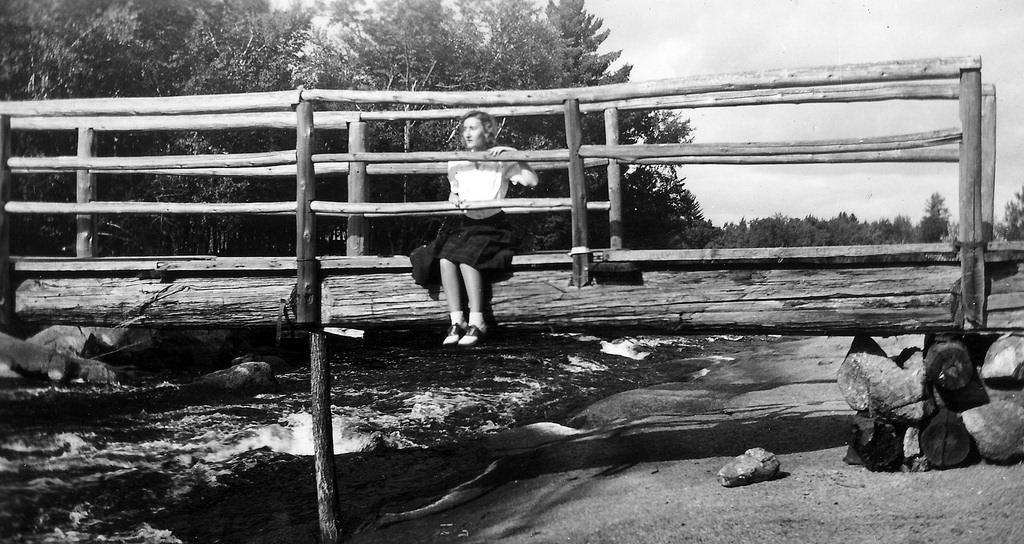
Perched on the sturdy rail of a rustic wooden bridge, a young woman pauses above rushing water, her posture relaxed as if savoring a quiet moment outdoors. Trees crowd the far bank, and the bright sky throws crisp light across the weathered timbers and scattered rocks below. The scene feels like an everyday excursion—part picnic, part stroll—captured in the unguarded way family cameras often preserved.
Her outfit anchors the era’s casual polish: a light blouse paired with a dark, full skirt, finished with the unmistakable contrast of saddle shoes. Those two-toned shoes—practical, sporty, and clean-lined—became a staple of women’s fashion at the height of their popularity, equally at home with school-day looks and weekend leisurewear. Even from a distance, the rounded toe and bold color-blocking read clearly, drawing the eye to the simple design that made the style iconic.
What makes the photograph memorable is how seamlessly fashion and setting meet, with the modern comfort of saddle shoes set against a landscape that looks timeless. The bridge’s rough-hewn construction and the lively current beneath it suggest a day spent exploring, where durable footwear mattered as much as style. As a piece of fashion and culture history, it reflects the era’s embrace of youthful, active femininity—clothes made to move, and shoes made to go along for the ride.