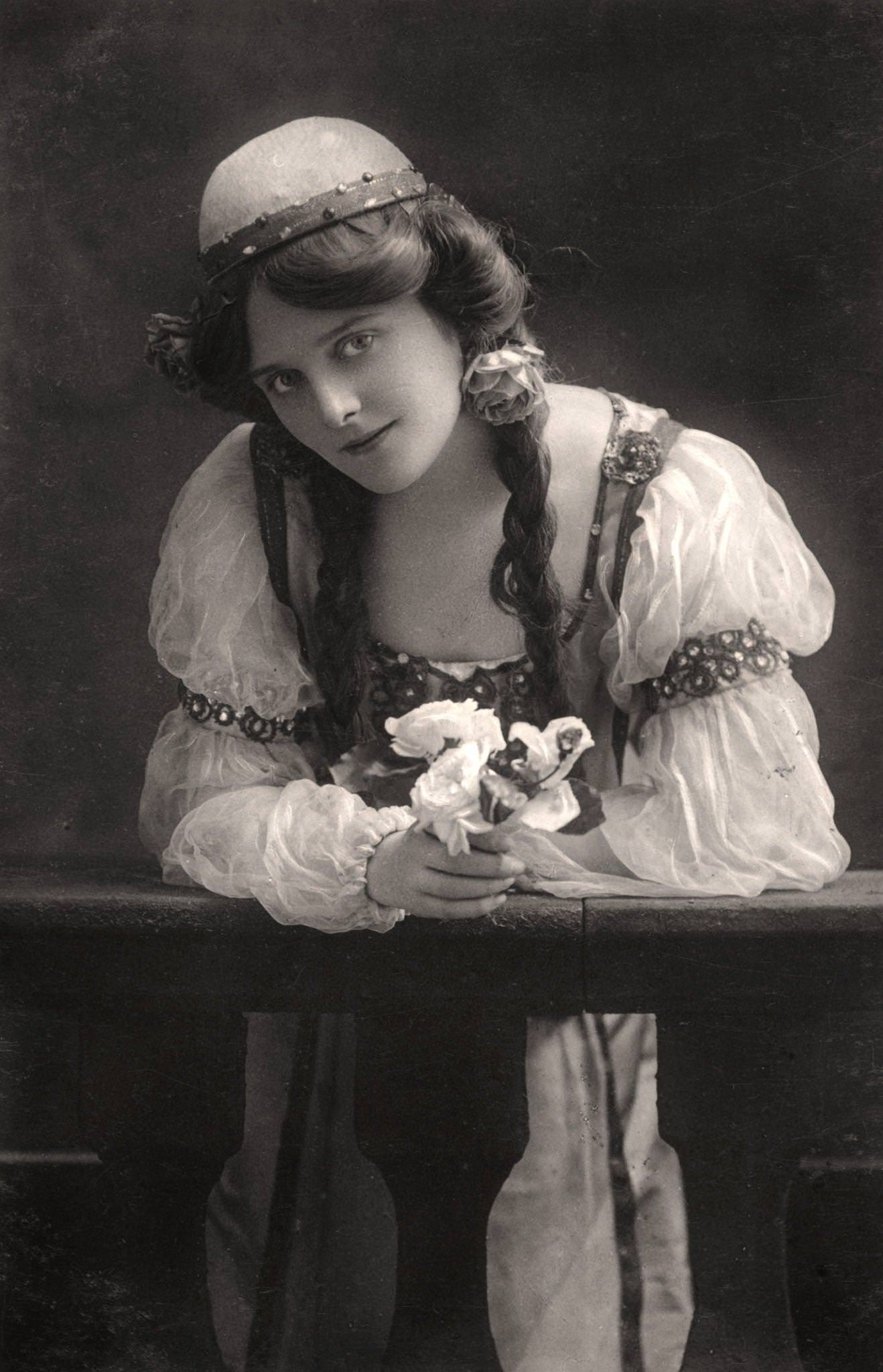
Maie Ash leans toward the camera with an intimate, stage-like confidence, her gaze steady and slightly playful against a dark studio backdrop. The portrait is carefully composed: elbows resting on a ledge, hands gathered around a small bouquet, the soft lighting modeling her face in gentle gradients typical of turn-of-the-century photography. Even without a named location, the controlled setting and theatrical pose suggest a professional studio sitting meant to flatter and to endure.
Her hairstyle does much of the storytelling, echoing the late Victorian to early Edwardian fascination with romantic, feminine silhouettes. Hair is parted and swept into smooth waves before falling into two long braids, each tied with a flower that mirrors the blossoms she holds. A rounded cap or headpiece, edged with small decorative studs, crowns the look and draws attention to the sculpted arrangement—an appealing reference point for anyone researching Victorian-era women’s hairstyles beyond the famous “Gibson Girl” ideal.
Costume details reinforce the fashion-and-culture theme: voluminous sheer sleeves, ribboned trims, and patterned bodice panels create contrast and texture in the monochrome print. The combination of flowers, braids, and delicate fabric reads as both sentimental and carefully curated, the kind of imagery that circulated widely in portraits and promotional photographs around 1900. For modern viewers, the picture offers a vivid snapshot of period beauty standards—how hair, accessories, and dress were orchestrated to project youth, refinement, and a touch of theatrical romance.