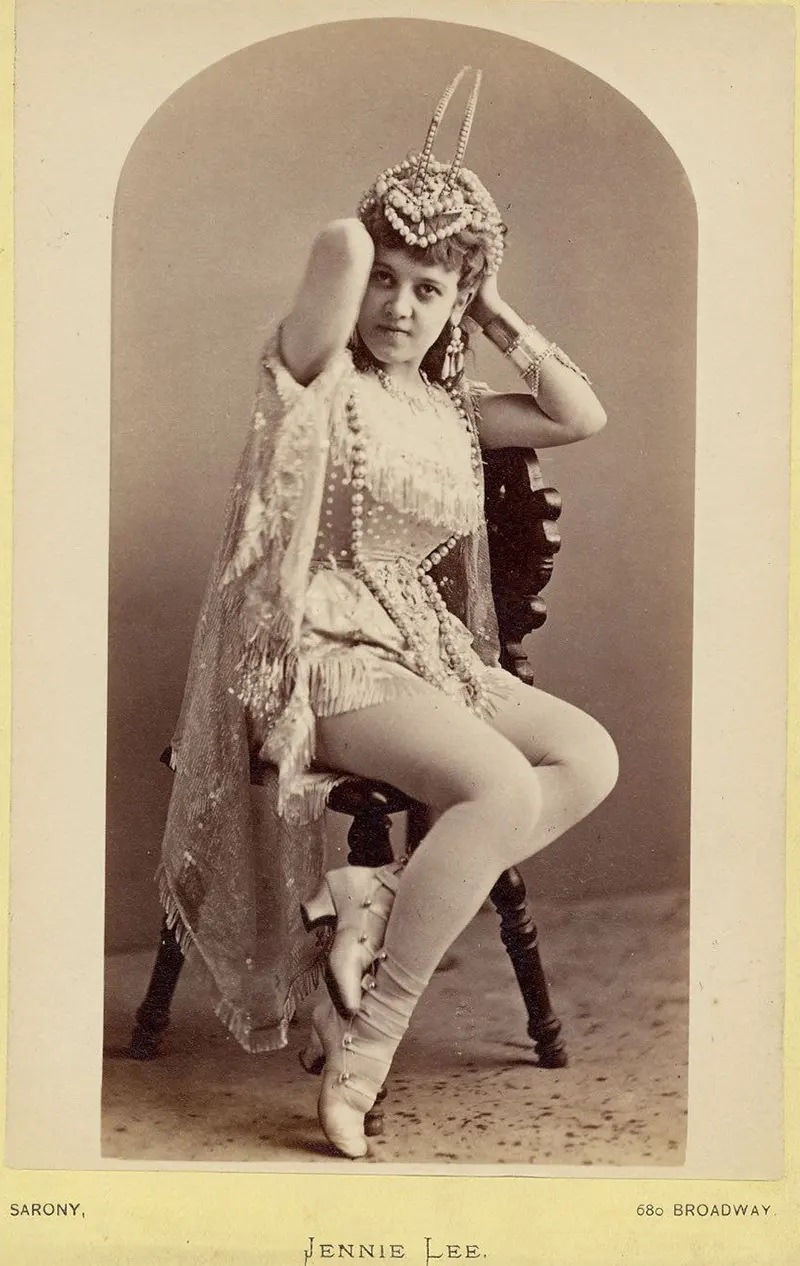
Perched sideways on a carved studio chair, Jennie Lee meets the camera with a calm, practiced gaze while lifting a beaded headdress into place. The pose is theatrical yet controlled—one arm raised, the other bracing behind her head—inviting attention to the glittering headpiece, dangling earrings, and stacked bracelets that frame her face and bare arms. Set against a plain backdrop, the portrait turns costume into the main subject, letting texture and shine carry the drama.
Her outfit leans into the late-Victorian taste for stage spectacle: fringed bodice, ornate belt, and a draped cape-like wrap that falls in shimmering folds. Light-colored stockings and strapped shoes complete the look, suggesting a dancer’s wardrobe designed for movement as much as display. Beads, fringe, and metallic trims catch the studio lighting, producing the kind of visual sparkle that would have read clearly even from the back rows of a theater.
Along the lower margin, the printed name “Jennie Lee” anchors the image as a promotional photograph, the sort that circulated to advertise performers and their latest “interesting costumes.” Viewed today, it offers a vivid glimpse of Victorian burlesque fashion and the photographic staging that helped build celebrity: a carefully arranged chair, an uncluttered set, and a performer frozen mid-adjustment as if the show is about to begin. The result is both a document of entertainment history and a study in how costume, pose, and portraiture shaped popular culture.