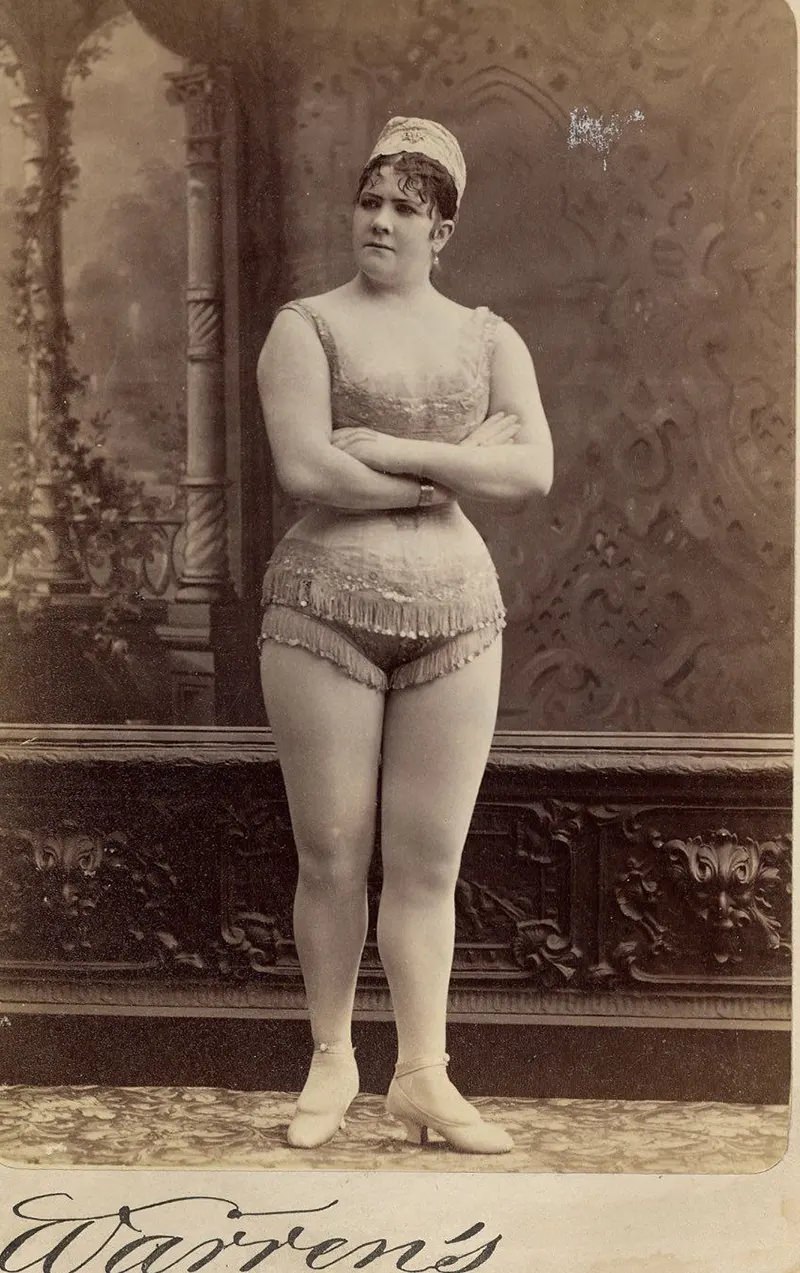
Viola Clifton stands facing the camera with her arms folded, projecting a self-possessed, almost challenging poise that feels at once theatrical and intimate. Her gaze drifts slightly to the side rather than locking onto the lens, giving the impression of a performer caught between pose and personality. The studio setting—patterned backdrop, carved paneling, and a decorative column—frames her as a professional subject rather than a casual sitter.
A sleeveless, short top trimmed with fringe and matching fringed trunks define the costume, the swaying details designed to animate movement under stage lights. A light head covering and short, curled hair soften the silhouette, while sturdy footwear suggests practicality as much as style. Even in a still photograph, the outfit reads as burlesque attire meant to emphasize rhythm, lines of the body, and the spectacle of dance.
Set within late Victorian entertainment culture, the portrait points to the period’s fascination with novelty performance, daring costumes, and the commercial polish of promotional imagery. The careful staging and confident stance speak to the ways burlesque dancers crafted public personas in an era that both policed and consumed glamour. For readers searching Victorian burlesque history, 1890s stage fashion, or early performance photography, this image offers a vivid glimpse of how costume, attitude, and studio artistry worked together to sell a show.