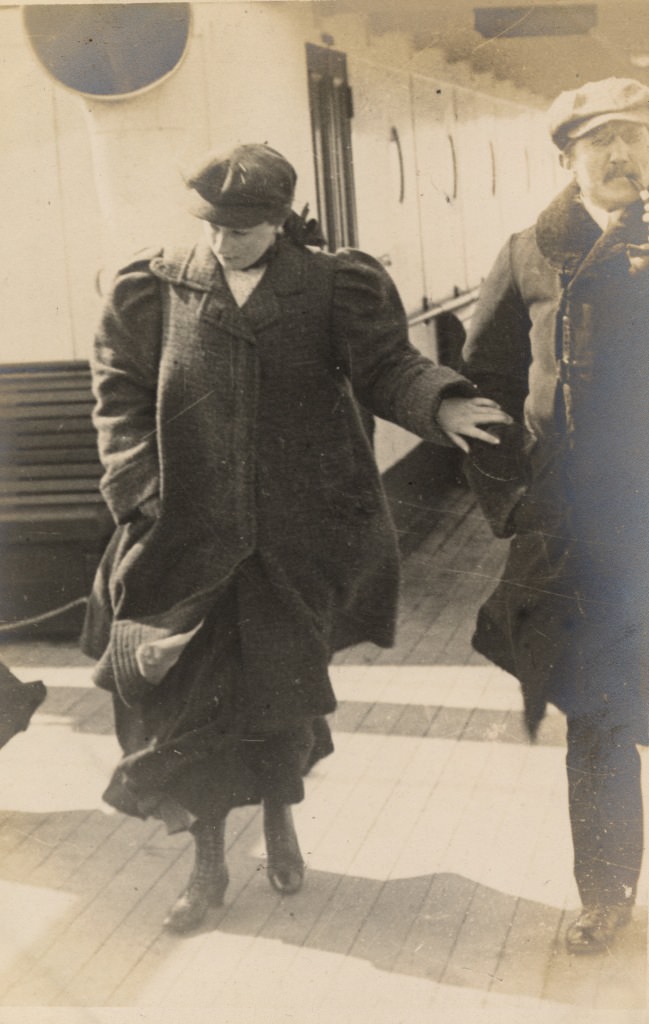
A brisk seaside wind seems to tug at every hem and sleeve as a stylish woman steps forward, her long coat swelling around her like a sail. The high collar and tailored cut hint at Edwardian fashion’s love of structure, even in leisure, while sturdy lace-up boots and a brimmed hat suggest practicality beneath the polish. Beside her, a companion in a flat cap and heavy outerwear keeps pace, the pair moving with the unselfconscious familiarity of people often photographed together.
The shipboard setting is unmistakable: a plank deck underfoot, a bench along the bulkhead, and portholes punctuating the pale wall behind them. It’s the kind of in-between space that defined early twentieth-century travel—neither home nor destination, but a corridor of motion where holidaymaking and modern transport met. Seaside culture in places like Brighton and Folkestone relied on precisely these connections, ferrying day-trippers and longer-stay visitors into the rituals of promenade, pier, and beach.
“The same pair seen again” reads like a small note from a family album, inviting viewers to recognize returning faces across a series rather than in a single frozen moment. Such repeated portraits were a quiet form of storytelling, recording companionship as much as clothing, and turning ordinary journeys into keepsakes. For historians of fashion and everyday life, this scene offers rich details: layers built for changeable coastal weather, the confident posture of a woman in public space, and the easy partnership of travel at the height of Edwardian seaside chic.