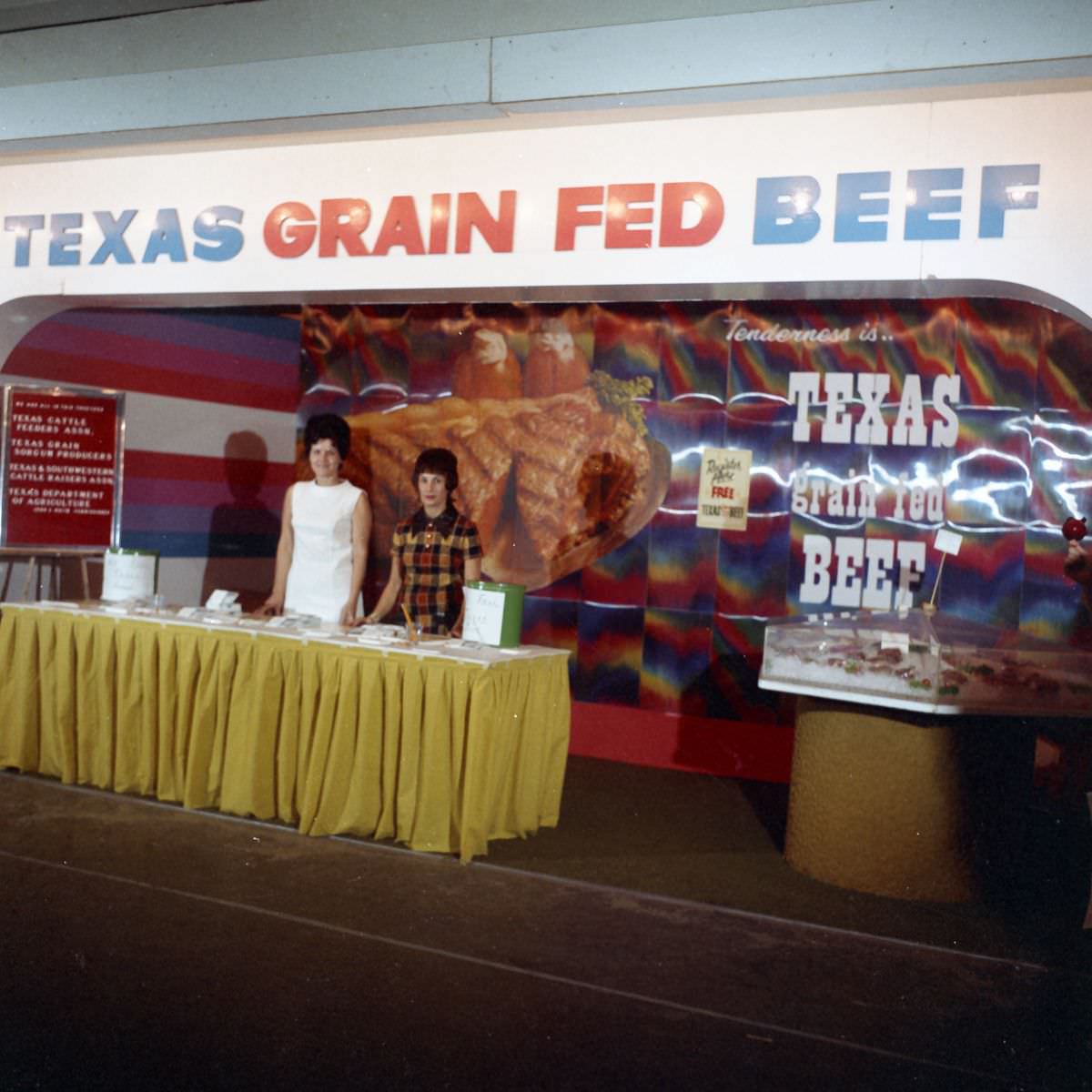
Bold block letters reading “TEXAS GRAIN FED BEEF” stretch across the top of a fairground booth, anchoring the scene in the promotional spectacle of the Texas State Fair era. Beneath the signage, two women stand behind a long, skirted table laid out with pamphlets and display materials, the kind of information counter that bridged agriculture, marketing, and public education. A vivid backdrop—dominated by an oversized image of beef and the slogan “Tenderness is… TEXAS”—turns food production into pageantry in its own right.
Fashion details quietly date the moment: a clean, sleeveless white shift on one figure contrasts with the other’s plaid, short-sleeved dress, both reflecting early-1970s silhouettes and a practical, polished fair-day look. Their composed postures suggest attendants, hostesses, or representatives stationed to greet visitors and keep the exhibit running smoothly. Even without a visible crown in the frame, the atmosphere aligns with the State Fair’s tradition of themed queens and sponsored titles, where industry groups tied local products to glamour and civic pride.
Across this kind of midway culture, beauty pageant branding and commodity promotion often overlapped, and the photograph hints at that intersection central to “Crowning Miss Pecan Nuts” and similar contests. The booth’s saturated colors, oversized typography, and staged displays reveal how Texas agriculture sold itself through spectacle—part education, part entertainment, and part regional identity campaign. For readers interested in 1972 Texas State Fair fashion and culture, the image offers a candid glimpse of how sponsors shaped the look and feel of fairground celebrations, from the clothes worn on the floor to the larger-than-life visuals behind them.