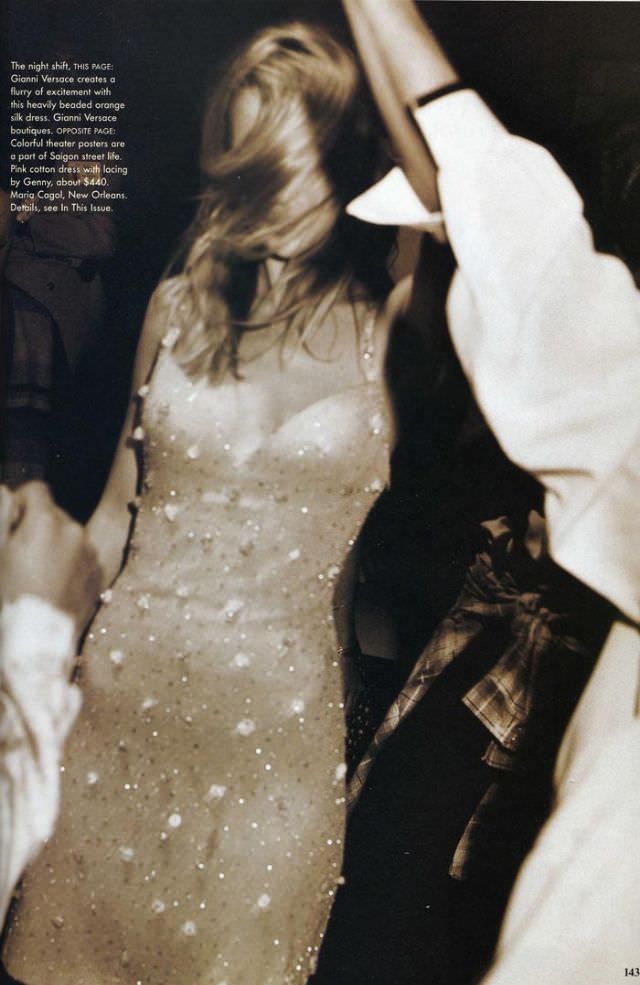
Motion blurs across the frame as a slim figure in a sparkling, beaded slip dress moves through a crush of bodies, her face partly veiled by hair and raised arms. The photograph’s grainy, nightlife atmosphere—more felt than clearly seen—turns the dress’s scattered glints into tiny flashes of light, like reflections caught mid-dance. Cropped torsos and sleeves press in from both sides, creating the sense of a crowded room where glamour and heat collide.
Printed fashion copy along the left margin anchors the scene in magazine storytelling, calling out designer labels and styling details while the image itself stays deliberately elusive. That contrast—precise shopping-note language versus the impressionistic, documentary-like moment—was a signature of 1990s editorial photography, when mood could matter more than clarity. The result reads like a found snapshot from a night out, elevated into Vogue’s carefully staged spontaneity.
Bruce Weber’s lush editorial direction, paired with the title’s “Jungle Fever” and “Good Morning Vietnam” reference, leans into a cinematic fantasy of humid streets, posters, and pulse, filtered through late-20th-century fashion culture. Even without a clear setting, the styling and energy suggest an imagined Saigon nightlife—part war-movie echo, part club scene—used as a backdrop for high-fashion sparkle. As a June 1996 Vogue US moment, it reflects the era’s appetite for exoticized atmospheres, pop-culture borrowing, and models presented as fleeting characters in a larger narrative.