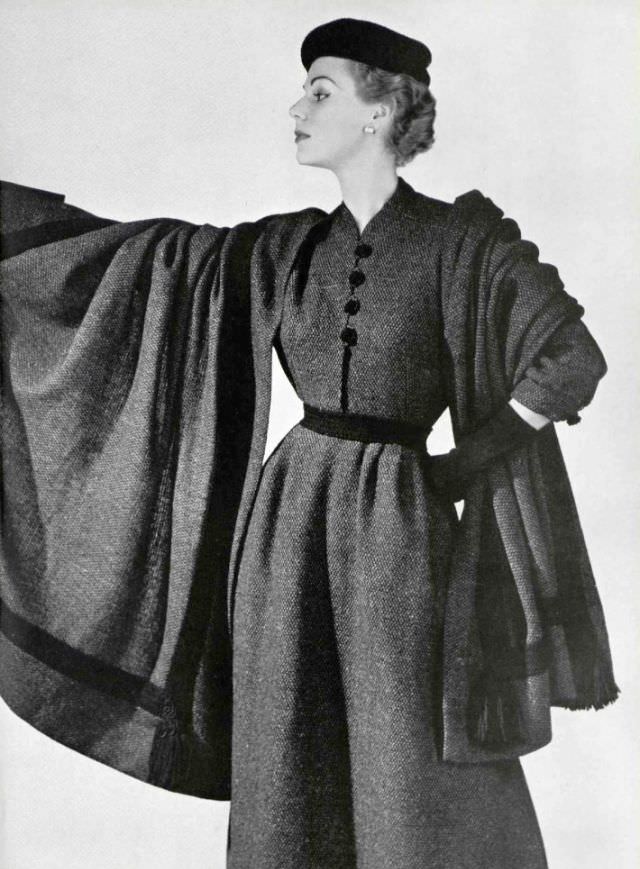
Poised in profile, Stella turns her gaze away from the camera while a sweeping shawl stretches outward like a stage curtain, emphasizing the drama of otherwise practical daywear. The tweed day-dress attributed to Madeleine de Rauch reads as quintessential early-1950s elegance: structured yet easy, with a defined waist and a long, clean skirt that elongates the silhouette. A small hat and simple earrings add polish without distracting from the garment’s texture and line.
Details do the storytelling here—the pronounced row of buttons down the bodice, the crisp collar, and the careful tailoring that shapes the torso before releasing into volume. The tweed’s subtle patterning and the shawl’s heavy drape suggest warmth and durability, signaling a fashion moment when refinement met real-world wearability. Even in a studio setting, the pose highlights movement, inviting the viewer to imagine how the wrap would fall as she walks.
Fashion photography of this period often balanced restraint with theatricality, and this composition leans into that tension: a calm expression paired with a bold, winglike spread of fabric. The look speaks to postwar style ambitions—composed, mature, and designed for daytime public life, from city errands to social calls. As a snapshot of 1953 fashion culture, it preserves the quiet authority of tweed and the designer’s knack for making everyday clothing feel unmistakably elevated.