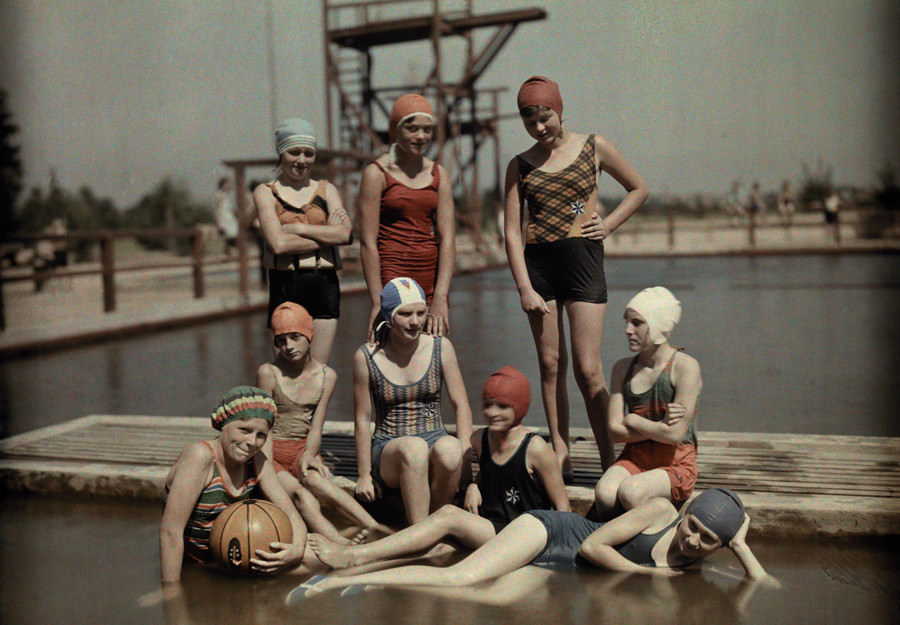
Sunlight falls across a wooden dock where a group of teenage girls lounge and pose in bathing suits and snug swim caps, their relaxed stances suggesting a day meant for leisure rather than ceremony. The setting reads as a managed bathing area—calm water, a long edge of planks, and a tall structure behind them that hints at diving or swimming facilities. Even without motion, the scene feels lively: crossed arms, hands on hips, and easy smiles create the kind of candid confidence that makes 1928 feel suddenly close.
Clothing details pull the viewer straight into late-1920s beach culture in Germany, when practical swimwear met emerging modern style. One-piece suits with contrasting panels, stripes, and bold color blocks show how design had moved beyond mere modesty into sportiness and self-expression, while the caps unify the group as if they’ve come for a swim lesson, club outing, or an afternoon at a public lido. A ball tucked into the foreground adds another layer, pointing to games and social fun as part of the lakeside routine.
Taken in March 1928, the photograph carries the quiet thrill of early-season optimism—an anticipation of warmer days and the freedom associated with outdoor recreation. It also offers a valuable glimpse into everyday youth culture between the wars, when swimming spaces became modern stages for health, fashion, and friendship. For readers interested in 1920s swimwear, women’s fashion history, and German social life in the interwar period, this image is both a charming portrait and a document of changing attitudes toward sport and leisure.