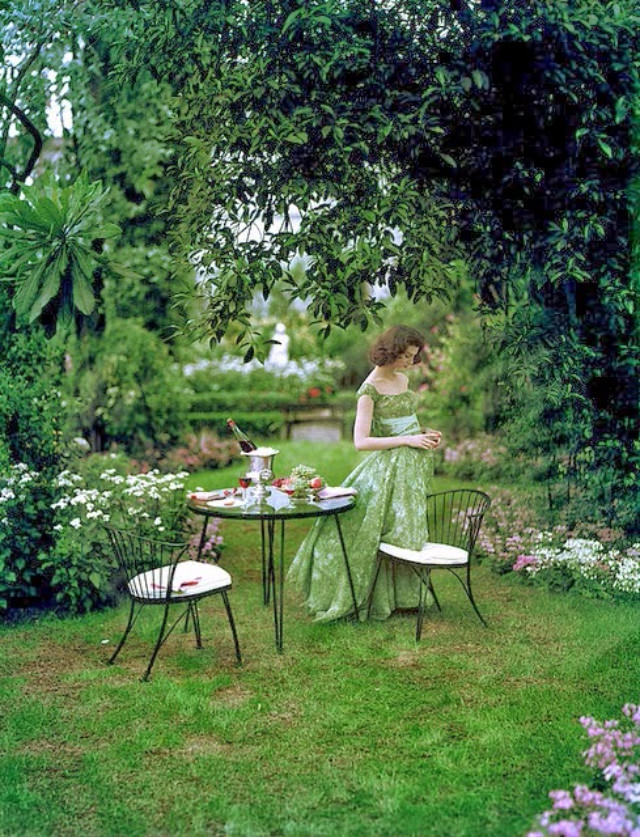
Under a canopy of leafy branches, a model in a pale green gown turns a quiet garden into a stage, where fashion is meant to be lived rather than merely displayed. A small wrought-iron table is set for an outdoor moment—silver service, glassware, and a few bright accents—suggesting leisure, etiquette, and the careful choreography behind mid-century style. The soft, painterly color and dappled light lean into the era’s love of romance and refinement, letting the dress read as part of the landscape instead of an isolated object.
1950s editorial work for Vogue and Harper’s Bazaar often traded studio rigidity for atmosphere, and scenes like this reveal how much storytelling mattered to a fashion photoshoot. The pose is restrained, almost candid, but every element feels arranged: the curve of the chairs, the crisp linens, the surrounding blooms, and the way the skirt pools on the grass. It’s a reminder that fashion photography in this period balanced glamour with domestic fantasy, selling not only silhouettes but a whole cultural mood of postwar elegance.
Beyond the couture, the image hints at the collaborative artistry—stylists, photographers, set dressers, and editors shaping a narrative that readers could step into. For anyone searching vintage fashion photography, 1950s Vogue editorials, or Harper’s Bazaar style history, this post looks past the finished frame to the craft of making it: composition, color, setting, and the subtle gestures that turn a dress into an unforgettable scene. In that space between spontaneity and direction, the fashion photoshoot becomes its own kind of performance.