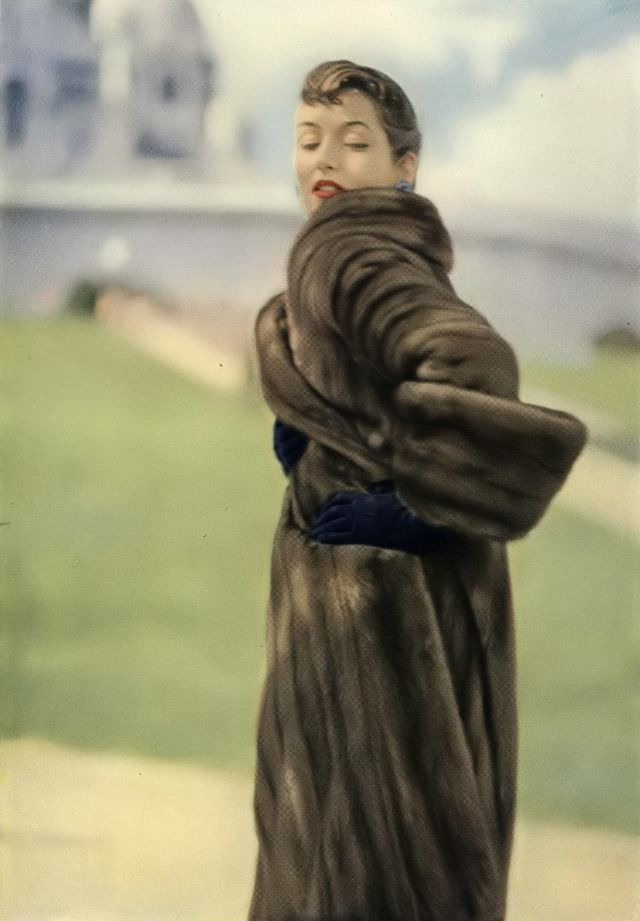
Maxime de la Falaise turns mid-stride, the sweep of an Aleutian EMBA mink coat by Christian Dior catching the air like a heavy curtain of silk. The fur reads as sculptural rather than merely warm—broad at the shoulders, generous through the body, and finished with a plush collar that frames her face. A flash of bright lipstick and neatly waved hair brings crisp 1950s polish to the look, while dark gloves reinforce the poised, city-ready elegance.
Behind her, the background falls into a soft blur of pale stone architecture and open sky, keeping attention on the coat’s rich sheen and directional lines. The slightly tilted pose suggests motion and confidence, as if the wearer has just glanced back toward a companion or a camera across a promenade. Even in color, the palette stays restrained—cool surroundings set off the deep, lustrous brown of mink, letting texture and silhouette do most of the storytelling.
Fashion photography of this era often celebrated postwar luxury through tactile materials, and this portrait leans into that mood with quiet authority. Dior’s name signals high couture at a moment when the house’s glamorous proportions were defining modern femininity, and the EMBA mink underscores the period’s appetite for opulence in outerwear. For readers searching mid-century style, Christian Dior fur coats, or Maxime de la Falaise fashion history, the image offers a concise lesson in how a single garment could embody status, craft, and cultural aspiration in 1950.