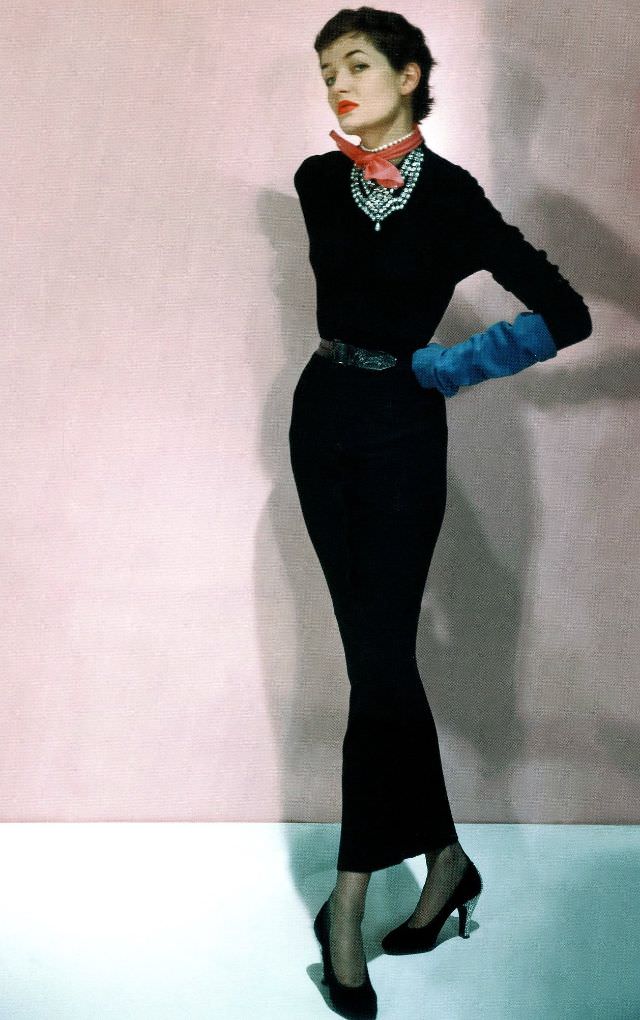
Poised in three-quarter profile against a plain studio backdrop, Maxime de la Falaise models a sleek, body-skimming black dress she designed for Paquin in 1950, turning minimalism into pure drama. The silhouette is long and narrow, cinched with a slim belt at the waist, letting the line of the garment do the talking. Her stance—one hip set, shoulders angled, chin tipped slightly upward—adds the kind of controlled attitude that made mid-century fashion photography feel like theater.
Color accents sharpen the look into a memorable signature: vivid red lipstick, a small red bow at the throat, and striking blue gloves that pull the eye from neckline to hands in one deliberate sweep. A multi-strand, sparkling necklace sits high on the chest, balancing the severe elegance of the dress with a burst of opulence. Even the understated black heels and sheer stockings reinforce the era’s polished code of chic, where every detail was coordinated for maximum impact.
In the broader story of postwar couture and style culture, the image reads as both portrait and fashion statement—designer and muse merged into one commanding figure. Paquin’s name evokes the lineage of Paris fashion, while de la Falaise’s design emphasizes confidence over ornament, suggesting a modern woman dressing for visibility and power. For anyone searching mid-century couture, 1950s eveningwear, or classic fashion photography, this photograph distills the period’s crisp glamour into a single, unforgettable pose.