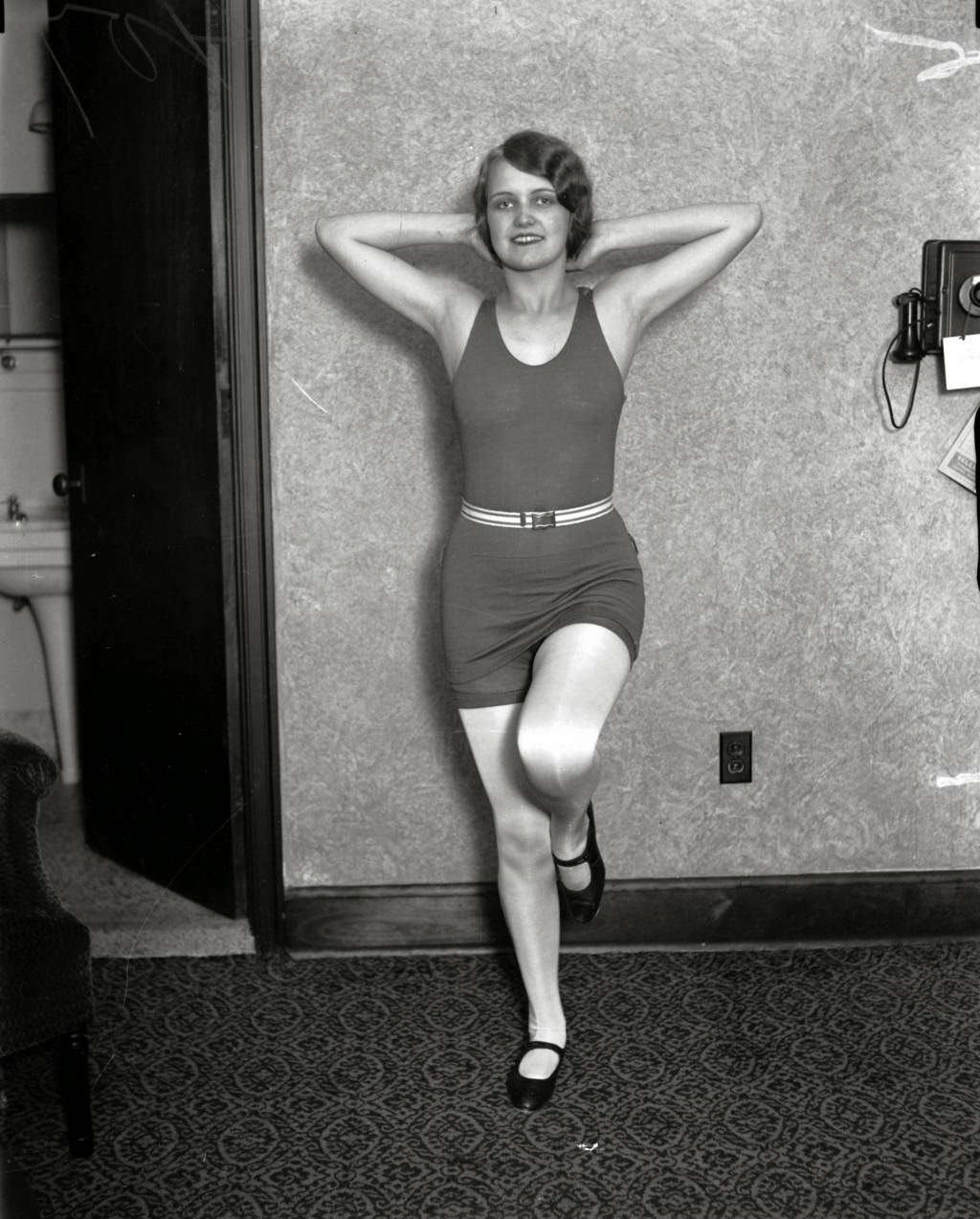
Leaned back with her hands clasped behind her head, 16-year-old Lois Delander strikes a confident, almost playful pose that feels unmistakably of the Roaring Twenties. Her sleek bob, bright smile, and fitted athletic-style outfit suggest a moment when modern femininity was being reimagined—less corseted, more mobile, and ready for the spotlight. The simple interior setting keeps attention fixed on her self-assurance, a quality that helped carry her from the Miss Illinois contest to the larger Miss America stage in Atlantic City in 1927.
In the broader story of 1920s beauty culture, pageants didn’t just crown winners; they broadcast changing ideals about youth, style, and public performance. Delander’s look aligns with the flapper era’s fascination with streamlined silhouettes and a new emphasis on vitality, while still reading as carefully composed for the camera. As a historical photo, it offers a vivid clue to how contestants were presented—poised, approachable, and framed as symbols of a modern age.
Beyond the title and sash, what lingers is the everyday texture around her: patterned carpet underfoot, a doorway at the edge of the frame, and a wall-mounted telephone that quietly dates the scene to an earlier domestic world. For readers interested in Miss America history, 1920s fashion, or the cultural rise of Chicago-area “beauty” competitions, the image serves as a compact time capsule. It reminds us how quickly a teenager could become a national headline, and how the camera helped turn that moment into lasting memory.