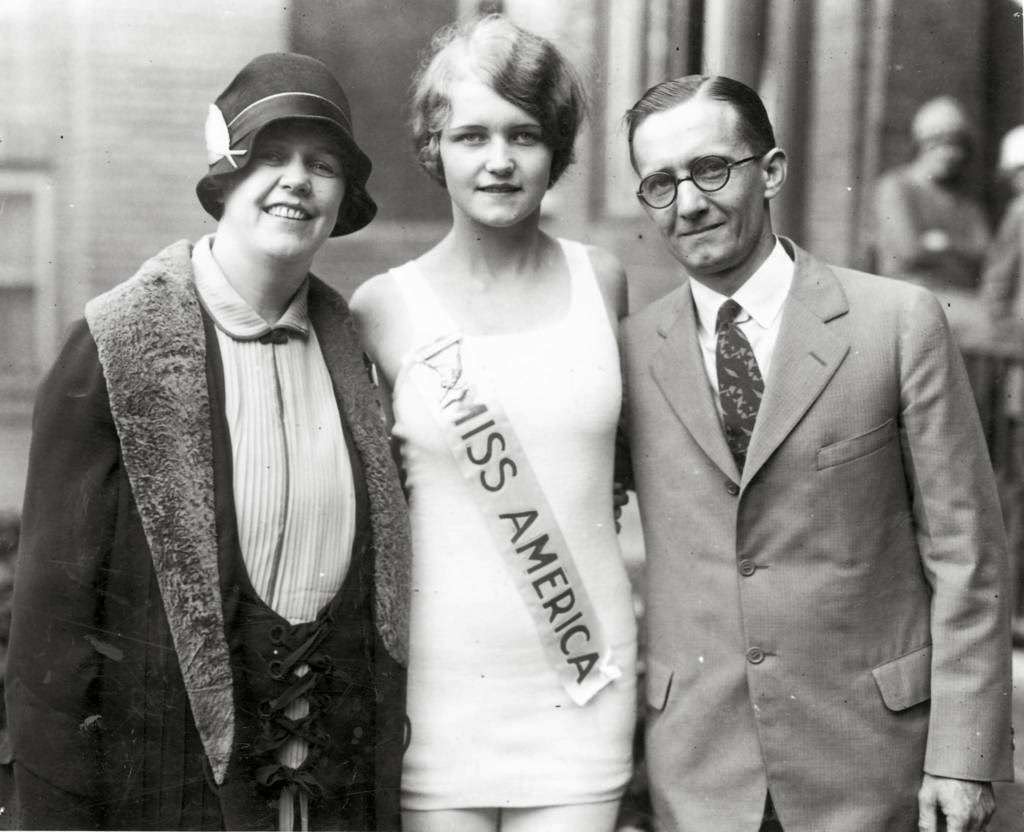
Fresh from her 1927 Miss America win, Lois Delander stands centered between her parents, the bold “Miss America” sash cutting diagonally across a sleek, era-defining dress. The close grouping and steady gazes give the scene a quiet intimacy, balancing public triumph with the familiar reassurance of family. Even without a staged backdrop, the portrait reads like a headline made personal—celebrity distilled into a single, direct moment.
Her mother’s cloche hat and plush-trimmed coat nod to the practical glamour of late-1920s women’s fashion, while her father’s neatly tailored suit and round spectacles anchor the image in everyday respectability. Delander’s short, modern hairstyle and simple silhouette echo the flapper-era shift toward streamlined looks and new attitudes, when beauty contests and mass media helped set national trends. Together, their clothing and posture offer a compact snapshot of American style, aspiration, and the social currents of the Jazz Age.
Family photographs like this help explain why 1920s pageantry mattered beyond the stage: they connected local pride and private life to a growing culture of celebrity. For readers interested in Fashion & Culture—especially the Chicago-centered story of “beauties” and modern womanhood—this image provides a tangible link between the Miss America phenomenon and the decade’s rapidly changing ideals. It’s a reminder that behind the sash and publicity, there was still a daughter framed by the people who knew her first.