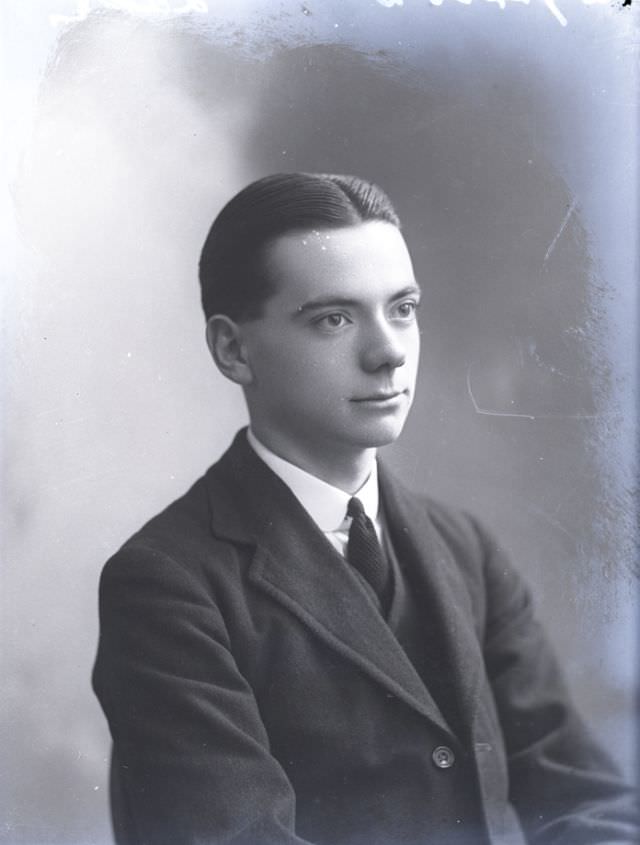
Poised in three-quarter profile, a neatly groomed teenage boy embodies the polished confidence associated with Edwardian-era style. His hair is slicked back with a crisp side part, and his calm, attentive expression feels deliberately composed for the camera. The plain studio backdrop keeps the focus on face, posture, and clothing—exactly what a formal portrait of the period was meant to preserve.
Tailoring does the talking here: a dark, structured jacket with broad lapels sits cleanly over a high, starched collar and narrow tie, creating the long, tidy line admired in early 20th-century menswear. Even without flashy accessories, the outfit reads as “dapper” through fit and finish, suggesting the growing importance of ready-to-wear suits and respectable dress for boys on the cusp of adulthood. Subtle details—the smooth shirtfront, the careful knot, the controlled silhouette—signal discipline, aspiration, and social presentation.
Beyond fashion, the portrait hints at a culture that treated clothing as character: to look orderly was to be seen as serious, modern, and prepared for the adult world. For anyone researching Edwardian teenage boys’ fashion, this image offers a clear reference point for hairstyles, collars, ties, and suit shapes that bridged schoolroom youth and grown-up respectability. It’s a quiet reminder that “Fashion & Culture” was never just about trends, but about how young men learned to perform identity through dress.