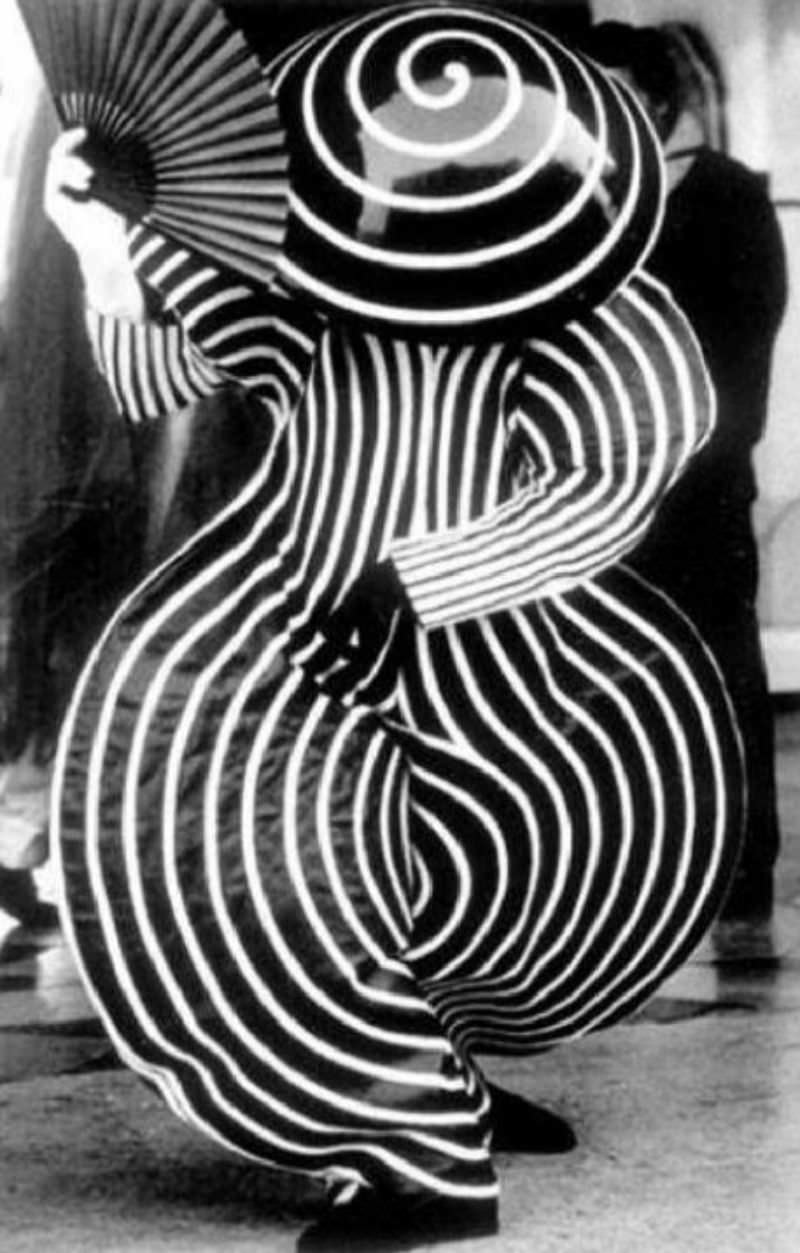
A figure in bold, striped costume bends into motion, transforming the human body into a living pattern of curves and lines. The oversized, spiraled headpiece hides the dancer’s face, turning identity into abstraction, while the sweeping stripes on the suit exaggerate every shift of weight. In one hand, a fan opens like a graphic prop, echoing the theatrical geometry that makes the Triadic Ballet so instantly recognizable in avant-garde performance history.
Unlike traditional stage dress meant to flatter anatomy, this design reshapes it—rounding shoulders, widening hips, and collapsing the silhouette into a controlled, sculptural form. The high-contrast black-and-white stripes read almost like optical art, making movement look mechanical and surreal, as if a modernist painting has stepped off the canvas. Even the cropped, intimate framing emphasizes fashion as architecture: costume as a constructed environment for the performer.
Rooted in Roaring Twenties experimentation, the scene reflects a moment when dance, design, and modern technology-inspired aesthetics collided on the stage. The Triadic Ballet’s geometric costumes became emblematic of early twentieth-century modernism, bridging fine art, theater, and fashion culture with a playful yet unsettling precision. For historians and enthusiasts of avant-garde dance, Bauhaus-era style, and 1920s cultural history, the image stands as a striking reminder of how performance could reinvent the body into pure form.