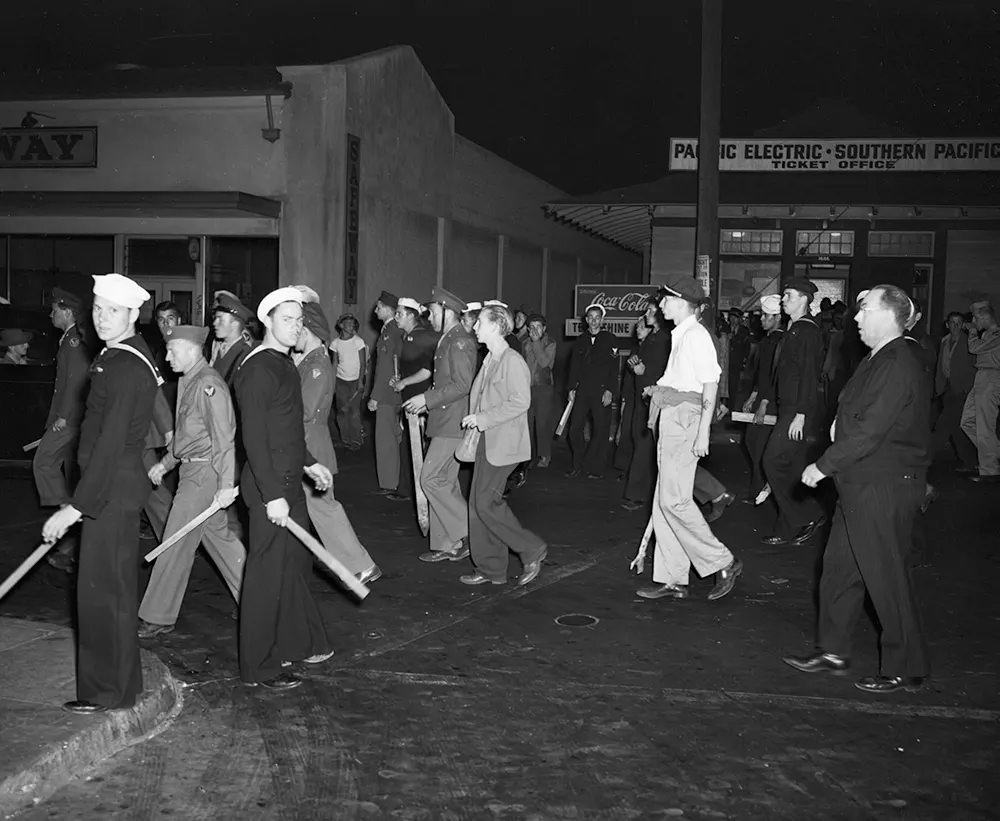
Under streetlights outside a rail ticket office, a column of uniformed men moves with purpose through the night, their sleeves rolled and their faces set. Several carry clubs and improvised weapons—pipes, sticks, and what look like bottles—held low at their sides as if ready for trouble. Behind them, bystanders and additional servicemen cluster along the curb, watching the procession spill across the pavement and into the street.
The signage for “Pacific Electric—Southern Pacific Ticket Office” anchors the scene in a transit corridor where crowds and rumors could gather quickly. The men’s mixed attire—naval caps, military uniforms, and civilian suits—suggests a self-appointed “posse” rather than an organized patrol, blurring the line between authority and vigilantism. In the tense atmosphere of June 1943, this kind of march became a hallmark of the Zoot Suit Riots, when the flamboyant zoot suit was treated not merely as fashion but as a provocation.
Intervention arrived when the Navy Shore Patrol stepped in to break up the group, a reminder that even wartime discipline could not always contain the street-level fury sparked by fear, prejudice, and moral panic. The photograph captures the volatile intersection of fashion and culture, military presence, and public spectacle—an American city at night turning into a stage for confrontation. For readers searching the history of the Zoot Suit Riots, the image stands as stark evidence of how quickly a cultural clash could be armed, mobilized, and carried down a city block.