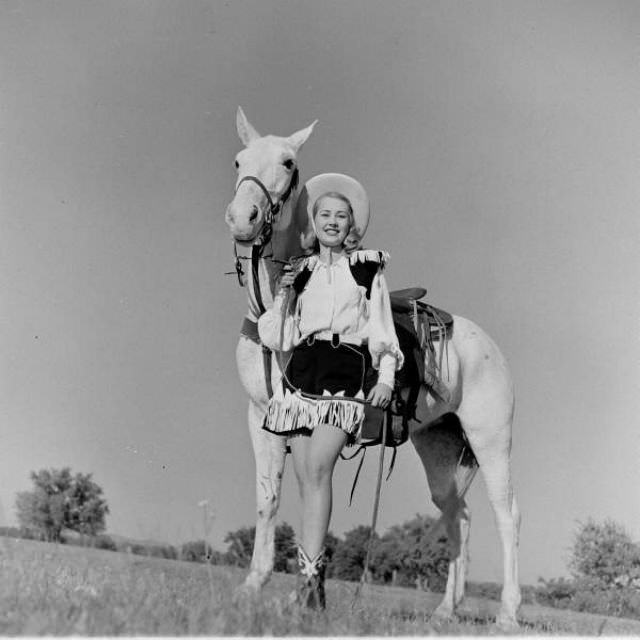
A bright hat brim, a confident smile, and a pale horse standing steady in open country—this scene leans into the cowgirl look that audiences loved, yet it also hints at the real skill and presence behind the pose. Fringed shorts, a tucked-in blouse, and tall, patterned boots create a crisp silhouette meant to read clearly even from a distance, while the saddle and bridle ground the styling in working tack rather than pure costume. The uncluttered horizon keeps the focus on how fashion and horsemanship were made to share the same frame.
In the 1940s, American cowgirl fashion lived in the space between practicality and performance, borrowing from ranch wear while amplifying it for rodeos, publicity photos, and popular entertainment. Fringe added motion, high-waisted lines sharpened the figure, and coordinated boots turned functional footwear into a statement piece—details that photographed well and circulated widely in magazines and promotional imagery. What emerges is a culture of Western style where clothing signaled capability and independence as much as it did glamour.
Look closely and the story becomes less about fantasy and more about how the “cowgirl” identity was constructed, worn, and recognized. The relaxed stance beside the horse suggests familiarity, not novelty, while the carefully chosen outfit shows how Western women could be framed as modern, athletic, and camera-ready without abandoning the symbols of rural life. For readers interested in 1940s Americana, Western wear history, and cowgirl culture beyond the silver screen, this photograph offers a vivid entry point into the era’s blend of myth, marketing, and everyday authenticity.