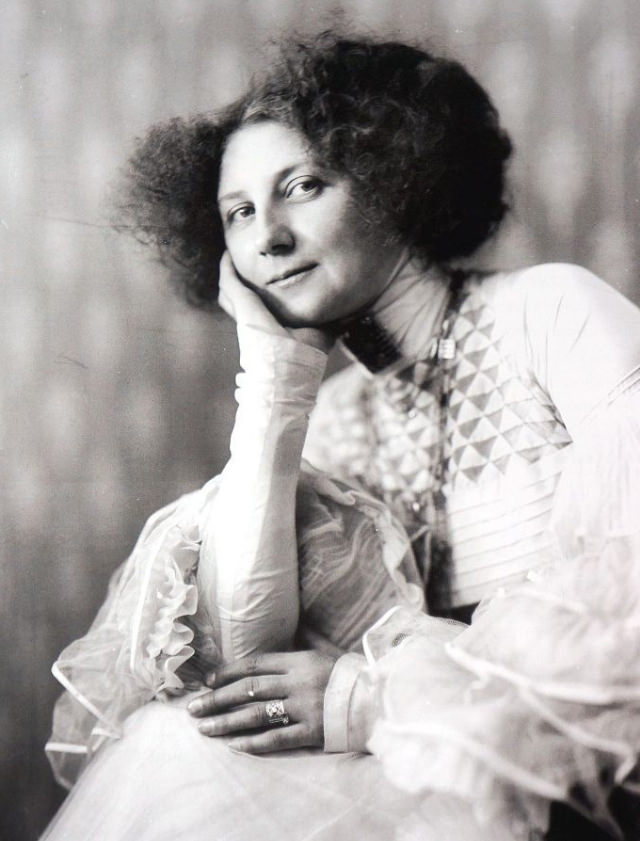
A poised woman leans into her hand, meeting the camera with a calm, knowing gaze that feels both intimate and self-possessed. The soft-focus studio backdrop and the careful styling draw attention to her silhouette—voluminous hair, long gloves, and a high neckline that suggests a modern sensibility rather than strict tradition. Even in stillness, the portrait carries the quiet confidence of someone who understood how clothing could communicate identity.
Emilie Flöge’s fashion career is often discussed through her influence and her circle, but rare photos like this invite a closer look at her own visual language. The layered textures—sheer ruffles at the sleeves, a patterned bodice, and delicate jewelry—hint at a designer’s eye for rhythm and contrast, balancing softness with structure. For readers interested in fashion history, early modern style, and women shaping culture through design, these details become a kind of archival evidence.
Within the broader theme of Fashion & Culture, this post follows Flöge’s story through images that illuminate how garments were worn, posed, and presented to the world. Portrait photography turns into a stage where new ideas about femininity, comfort, and self-expression can be read in fabric and form. Browse the collection as a visual biography: not just what was made, but how it looked in life—thoughtful, experimental, and unmistakably intentional.