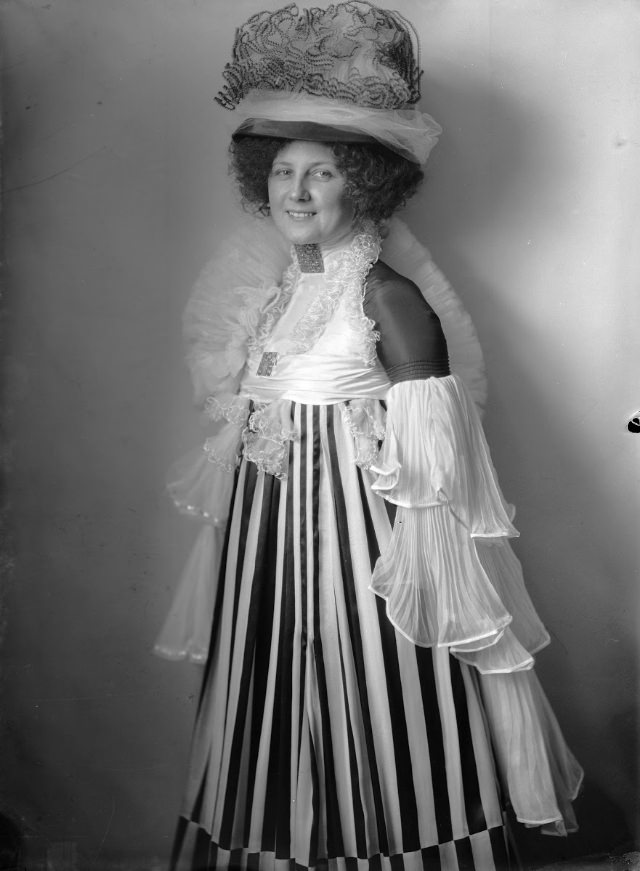
A poised woman faces the camera with a measured smile, framed by an extravagant hat and a halo of soft, feathery trim at her shoulders. The outfit is all theater and precision at once: a high lace collar, airy layered sleeves, and a skirt dominated by bold vertical stripes that pull the eye downward in crisp rhythm. Studio lighting turns texture into story, letting every ruffle, seam, and contrast read clearly—exactly the sort of visual evidence fashion historians crave.
Emilie Flöge’s career is often discussed as part of a wider turn toward modern dress, and rare photos like this make that transformation tangible. The silhouette balances formality with experimentation, mixing decorative excess with a cleaner, graphic sense of line that hints at new ideas about movement and the body. In that tension—between tradition and reform—her world of fashion and culture comes alive, inviting readers to look beyond “style” and see design as a social language.
Within the post, these images help trace how a designer’s vision travels from atelier imagination to lived reality, one garment at a time. Details that might be overlooked in text—sheer fabric against the arm, the sculpted height of the headwear, the deliberate geometry of stripes—become key clues when piecing together historical wardrobes. For anyone searching Emilie Flöge photos, early 20th-century fashion, or the evolution of women’s dress, this illustrated story offers an intimate, visually grounded way to understand her influence.