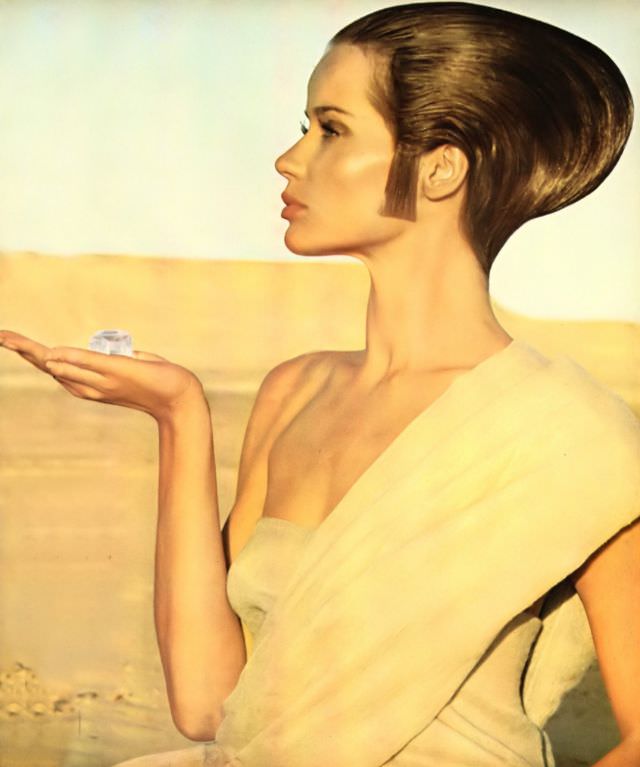
Profiled against a pale, sun-washed horizon, Veruschka appears like a modern relic, her gaze fixed beyond the frame with a sculptural calm. The styling turns her hair into an elongated, Egyptian-inspired sidelock, exaggerating the line of head and neck until it reads almost like carved stone. Warm, golden light smooths the scene into a near-monochrome of sand and skin, lending the fashion portrait a desert-dream atmosphere.
Her raised hand, poised as if offering a tiny object, introduces a ritual-like gesture that echoes the ancient reference without turning it into costume. A simple, draped garment slips over one shoulder, keeping attention on silhouette and surface—sharp jawline, sleek hair, and the deliberate economy of adornment. The composition’s spare background amplifies the editorial’s sense of mythmaking, where minimal props carry maximal symbolism.
Published in Vogue in 1967, the image reflects a moment when high fashion eagerly borrowed from art history and archaeology to project modern elegance. The photograph’s clean lines and controlled pose align with 1960s fashion photography’s fascination with graphic profiles, severe beauty, and cinematic storytelling. As a piece of fashion and culture, it distills Veruschka’s enigmatic presence into an icon: part model, part statue, and part imagined deity rendered for the magazine page.